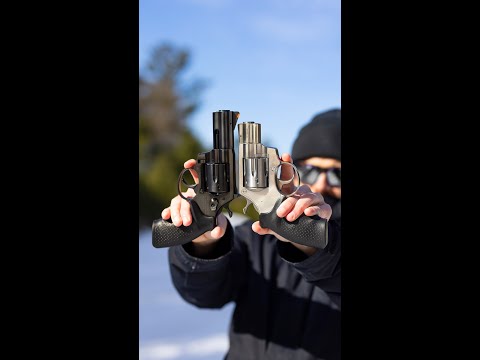
You SHOULD Concealed Carry a Revolver

Published on November 17, 2022
Duration: 4:45

John G. Johnson, a firearms instructor, discusses the pros and cons of concealed carrying a revolver. He highlights their simplicity, especially for those who cannot rack a semi-automatic slide, and their ability to be fired from a pocket. However, he notes their lower capacity and bulkiness as disadvantages. The guide covers basic operation, including loading, firing, and unloading.

Quick Summary

Revolvers offer simplicity for concealed carry, especially for those who struggle with semi-automatic slides. While their capacity is limited (5-6 rounds typically) and they can be bulkier, hammerless models prevent snagging on clothing. Aiming involves aligning the front sight blade within the rear sight's valley.

Chapters

  1. 00:00Introduction to Revolvers
  2. 00:22Why Choose a Revolver?
  3. 00:44Revolver Examples and Brands
  4. 01:13Revolver vs. Semi-Automatic Operation
  5. 01:37Revolver Capacity Limitations
  6. 02:04Revolver Disadvantages: Bulk and Recoil
  7. 02:21Hammer vs. Hammerless Revolvers
  8. 02:39Advantages of Hammerless Design
  9. 02:51Basic Revolver Operation
  10. 03:02Revolver Sights Explained
  11. 03:19Cylinder Loading and Ejection Demonstration
  12. 03:43Revolver Materials and Weight
  13. 03:54Revolver for Winter Carry
  14. 04:20Visit the Store for a Revolver

Frequently Asked Questions

What are the main advantages of concealed carrying a revolver?

Revolvers are praised for their simplicity, making them ideal for individuals who find semi-automatic slides difficult to operate. They also offer the unique advantage of being able to be fired from within a pocket without snagging, a feature not common with semi-automatics.

What are the primary disadvantages of carrying a revolver for self-defense?

The main drawbacks of revolvers for concealed carry include their lower ammunition capacity, typically five to six rounds, and their bulkier profile compared to many semi-automatic pistols. Recoil management can also be more challenging due to their design.

How does a hammerless revolver differ from a hammer revolver in terms of operation?

Hammerless revolvers are generally double-action only, meaning the trigger pull cocks and releases the hammer. Hammer revolvers can be operated in single-action (manually cocking the hammer before pulling the trigger) or double-action modes.

What is the recommended technique for aiming with typical revolver sights?

Revolver sights usually consist of a valley rear sight and a front blade. The aiming technique involves aligning the front blade so it appears 'buried' within the valley of the rear sight, ensuring the firearm is held level.

Related News

All News →

More EDC & Lifestyle Videos You Might Like

More from Firearms Training By John G. Johnson

View all →