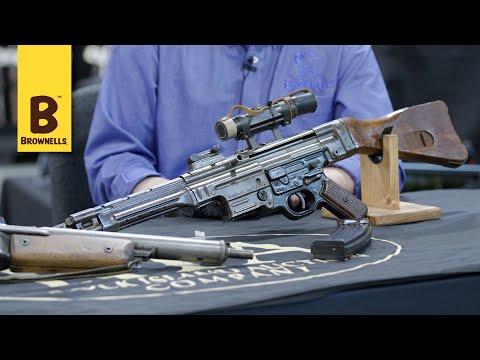
Did Hitler Cancel the Sturmgewehr?

Published on May 10, 2023
Duration: 20:02

This video from Forgotten Weapons, hosted by Ian McCollum, delves into the complex history of the Sturmgewehr 44 (StG 44) program. McCollum, a recognized expert in historical firearms, meticulously details how Hitler's initial rejections of the intermediate cartridge rifle were overcome through strategic renaming, combat trials, and the intervention of figures like Heinrich Himmler. The program ultimately succeeded due to its effectiveness on the Eastern Front and its role in countering Soviet submachine gun proliferation.


Quick Summary

The Sturmgewehr 44 (StG 44) program was complex; Hitler initially rejected it due to range and logistical concerns. However, the German Army General Staff persisted, renaming it MP 43 and proving its effectiveness in combat trials on the Eastern Front, eventually leading to its adoption.

Chapters

  1. 00:00Introduction: Hitler and the Sturmgewehr
  2. 00:45Early Development: MKB 42 Prototypes
  3. 02:30First Rejection (April 1942)
  4. 04:15Second and Third Rejections
  5. 07:10Subterfuge and Renaming: MP 43
  6. 08:00Field Trials on the Eastern Front
  7. 11:25Hitler's Change of Heart
  8. 16:30Himmler and the SS Influence

Frequently Asked Questions

Did Adolf Hitler cancel the Sturmgewehr 44 program?

While Adolf Hitler initially rejected the development of the intermediate cartridge rifle, which would become the Sturmgewehr 44 (StG 44), the program was not definitively canceled. Through strategic renaming to MP 43 and compelling combat trial results, the German Army General Staff successfully navigated Hitler's objections.

What was the initial designation of the Sturmgewehr 44?

The weapon that eventually became known as the Sturmgewehr 44 (StG 44) was initially designated as the MKB 42 (Maschinenkarabiner 42) during its early development. Later, to circumvent Hitler's disapproval, it was renamed MP 43 (Maschinenpistole 43).

Why did Hitler initially reject the Sturmgewehr program?

Hitler's initial rejection of the MKB 42 in April 1942 stemmed from several factors. He desired longer effective ranges for desert warfare, was concerned about the resource intensity of a new weapon system, and foresaw logistical difficulties in introducing a new cartridge alongside the standard 8x57mm Mauser.

What role did Heinrich Himmler play in the Sturmgewehr's adoption?

Heinrich Himmler and the SS were instrumental in the survival and eventual adoption of the Sturmgewehr. Seeking enhanced firepower for SS units, Himmler's influence helped bypass some of Hitler's earlier objections, contributing to the weapon's progression through development and adoption.

Related News

All News →

More General Videos You Might Like

More from Forgotten Weapons

View all →