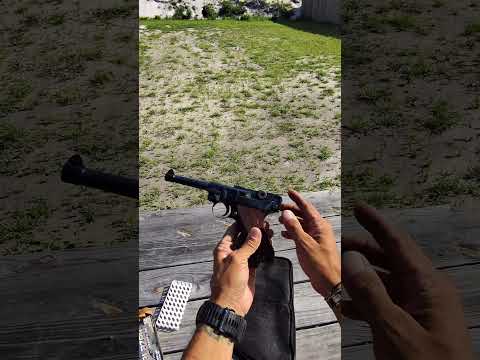
Dutch Navy Luger: From World War One to the End of Neutrality

Published on May 12, 2025
Duration: 0:58

The Dutch Navy Luger, a variant of the P08, saw limited adoption before 1928, primarily for the Naval Air Service. Distinctive Dutch markings include 'Rust' on the safety and 'Geladen' on the extractor as a loaded chamber indicator. Unlike standard Lugers, it lacks a grip safety but features a shoulder stock lug.

Quick Summary

The Dutch Navy Luger, a P08 variant, is distinguished by its lack of a grip safety and unique Dutch markings like 'Rust' (Safe) on the safety lever and 'Geladen' (Loaded) on the extractor. It was primarily adopted by the Naval Air Service before 1928.

Chapters

  1. 00:00Introduction: Dutch Military Luger Usage
  2. 00:15Procurement & Naval Air Service Adoption
  3. 00:29Technical Features & Dutch Markings

Frequently Asked Questions

What makes the Dutch Navy Luger unique compared to other P08 models?

The Dutch Navy Luger lacks a grip safety, a feature common on many other P08 variants. It also features specific Dutch markings, such as 'Rust' on the safety and 'Geladen' on the extractor, indicating it is loaded.

When were Lugers adopted by the Dutch Navy?

While revolvers were common until 1928, Lugers were purchased in smaller quantities by the Dutch Navy primarily for the Naval Air Service (pilots and observers) before wider adoption.

What do the Dutch markings 'Rust' and 'Geladen' mean on a Luger?

'Rust' is the Dutch word for 'Rest' or 'Safe' found on the safety lever. 'Geladen' is Dutch for 'Loaded', serving as a loaded chamber indicator on the extractor.

Related News

All News →

More General Videos You Might Like

More from Forgotten Weapons

View all →