History of the US Govt M4A1 Carbine

Published on November 2, 2024
Duration: 34:42

This video details the evolutionary history of the US Government M4A1 carbine from its inception in 1995 to the present day. It covers key modifications, the rationale behind them, and the ongoing relevance of the platform in modern military contexts, highlighting the US government's specific configurations and procurement decisions.

Quick Summary

The US Government M4A1 carbine has evolved significantly since its 1995 introduction, with key upgrades including the SOCOM barrel for improved heat resistance and an H2 buffer for reliable full-auto fire. Despite its age, the M4A1 remains the standard due to extensive adoption and logistics, with an expected service life of at least 20 more years.

Chapters

  1. 00:08Introduction to the M4A1 Carbine
  2. 00:12Evolution from M4 to M4A1
  3. 00:37US Government Configurations (1995-Present)
  4. 01:201995 M4 Carbine Features
  5. 02:30Burst Mechanism vs. Full Auto
  6. 03:10Extractor Spring Improvement
  7. 04:01New Polymer Stock
  8. 04:20Carryover from M16A2
  9. 05:07M4A1 Carbine (1995 Iteration)
  10. 06:03Government Profile Barrel Issues
  11. 07:31Development of the SOCOM Barrel
  12. 09:00Introduction of the RAS System
  13. 11:13Changes During Global War on Terror
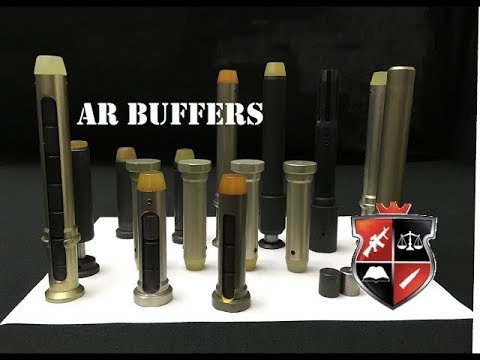
  14. 11:52Buffer Changes (H1 vs. H2)
  15. 14:17Weight Comparison
  16. 15:22Handguard Comparison (Heat Shields vs. RAS)
  17. 16:152011: Lessons Learned & PIP Program
  18. 17:43M4A1 Evolution: SOCOM Barrel & RAS
  19. 18:03Selective Fire & Ambi Selector
  20. 18:34Retrofitting M4s to M4A1s
  21. 19:00Third Generation M4A1
  22. 20:19M4A1 Plus Program
  23. 21:14Issues with RAS System & Free Floating Barrels
  24. 22:11PIP Program Handguard Submissions
  25. 23:05Enhanced Bolt Discussion
  26. 24:06Overall M4A1 History Summary
  27. 24:43Troop Preference & Combat Use
  28. 25:22Maintenance Issues
  29. 25:43Is the M4A1 Still Relevant?
  30. 26:07Modern Tests (Over the Beach, Bore Obstruction)
  31. 26:49US Government's Lack of Updating
  32. 28:12Colt's M5 and Future Competition
  33. 29:08Current Colt Sales & Global Conflicts
  34. 30:37FN as Primary M4A1 Maker
  35. 31:19Impact of Ammunition (M855A1)
  36. 33:19M4A1 Evolutionary Development Recap
  37. 33:33Next Generation Service Weapon (NGSW)
  38. 34:12Future Service Life of the M4A1
  39. 34:35Conclusion

Frequently Asked Questions

What were the key differences between the M4 and M4A1 carbines when they were first introduced?

The primary difference between the initial M4 and M4A1 carbines was the selector switch. The M4 featured a three-shot burst limiter, while the M4A1 was equipped with a full-auto selector, making it the preferred choice for Special Operations Forces (SOCOM).

How did the SOCOM barrel improve the M4A1's performance?

The SOCOM barrel, developed by Crane, was a mid-weight barrel designed to withstand higher volumes of sustained fire without overheating as quickly as the original government profile barrel. This improved reliability and reduced issues like failures to extract.

What is the significance of the H2 buffer in the M4A1?

The H2 buffer is crucial for the M4A1's full-automatic capability. It adds weight to the bolt carrier group, preventing bolt carrier bounce after firing, which ensures the rifle can cycle reliably and fire continuously without malfunction.

Why is the M4A1 carbine still relevant despite newer weapon systems?

The M4A1 remains relevant due to its widespread adoption, troop familiarity, and ongoing large-scale procurement by the US government. While newer systems exist, the M4A1's established logistics and proven service life ensure its continued use for at least another two decades.

More General Videos You Might Like

More from SmallArmsSolutions

View all →