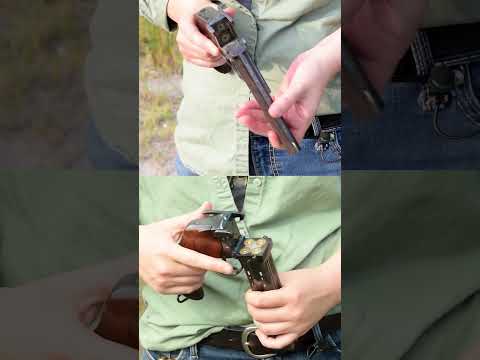
History Primer 204: Mexican Mondragon Model of 1894 Documentary | C&Rsenal

Published on December 10, 2024
Duration: 54:58

This video provides an in-depth historical and technical examination of the Mexican Mondragon Model of 1894 rifle. It details the rifle's development within the context of Mexican military modernization under Porfirio Diaz, highlighting its advanced features for the time, such as a straight-pull bolt action, a double-stack en-bloc clip system, and a novel 5.2mm cartridge developed with input from Ard Rubin. The presentation includes detailed disassembly and analysis of the rifle's mechanics, comparing it to contemporary designs and explaining its unique operational aspects, including its rapid-fire capability.


Quick Summary

The Mexican Mondragon Model 1894 was a highly advanced rifle for its era, featuring a straight-pull bolt, a double-stack en-bloc clip system, and a unique 5.2mm cartridge. Its three-way safety allowed for rapid 'slam fire' capabilities, enabling high rates of fire. However, its high production cost prevented widespread adoption.

Chapters

  1. 00:00Introduction: Mexican Mondragon Model 1894
  2. 00:44Physical Specifications and Initial Impressions
  3. 02:04Historical Context: Porfirio Diaz and Mexican Modernization
  4. 04:45Early Firearms Development in Mexico
  5. 05:15Manuel Mondragon's Background and Early Career
  6. 06:52Mondragon's Artillery Experience and Arms Industry Contacts
  7. 07:09Influence of Swiss Rifle Designs (Schmid-Rubin)
  8. 08:04Development of the 6.5x53mm Cartridge
  9. 09:07Examining the Trials Rifle (Pre-Production Model)
  10. 10:59Bolt Action Mechanism and Operation
  11. 12:49Magazine System: Double Stack En-Bloc Clip
  12. 13:33Role of the Rifle in Infantry Firepower
  13. 14:37Three-Way Safety and Rapid Fire Capability
  14. 15:20Disassembly of the Bolt and Action
  15. 19:24Comparison with Gewehr 1889 Bolt
  16. 20:33Detailed Examination of the Forend Construction
  17. 22:56Magazine Floor Plate and Follower Spring System
  18. 24:27Trigger and Sear Arrangement
  19. 25:53Further Trials and Improvements (1893-1894)
  20. 27:17Development of the 5.2mm Cartridge
  21. 29:11Examining the Model 1894 Production Rifle
  22. 30:46Rear Sight Improvements (Quadrant Sight)
  23. 31:02Action and Bolt Handle Updates
  24. 32:30Magazine Updates and En-Bloc Clip Functionality
  25. 34:59Detailed Look at the Follower Spring System
  26. 35:48Bolt Disassembly Refinements (Model 1894)
  27. 38:18Ejector and Extractor Mechanisms
  28. 39:14Safety Sear and Bolt Lockup
  29. 41:11Carbine Variant and Artillery Sling Mount
  30. 42:04Animated Explanation of Action and Magazine
  31. 42:53Bolt Locking Lugs and Safety Function
  32. 43:40Firing Pin Retention and Sear System
  33. 45:01Fire Selector and Rapid Fire Mode
  34. 46:08Magazine Feed and Ejection Process
  35. 46:37Live Fire Limitations and Cartridge Rarity
  36. 47:00Trials and Adoption of the Mondragon Rifle
  37. 48:11Final Version of the Bolt Action and Cartridge
  38. 49:33Adoption of the Mauser as an Interim Solution
  39. 50:33Reasons for Mondragon's Limited Production
  40. 51:20Conclusion: A Curious Turning Point in Firearms History
  41. 52:08Acknowledgements and Special Thanks

Frequently Asked Questions

What made the Mexican Mondragon Model 1894 rifle advanced for its time?

The Mondragon Model 1894 was advanced due to its straight-pull bolt action, a double-stack en-bloc clip system for rapid reloading, and a novel 5.2mm cartridge developed with Ard Rubin, offering high velocity and long-range accuracy.

How did the Mondragon Model 1894 achieve rapid fire capabilities?

The rifle featured a three-way safety that included a 'slam fire' mode. When set to this position, the trigger would release the firing pin each time the bolt was cycled, allowing experienced shooters to achieve very high rates of fire.

What was unique about the 5.2mm cartridge used in the Mondragon rifle?

The 5.2mm Mondragon cartridge was notable for its high velocity (around 2723 ft/s) and a unique piston-like ring near the bullet's base, which may have aided in centering the bullet and managing chamber pressure.

Why was the Mexican Mondragon Model 1894 ultimately not widely adopted?

Despite its advanced features, the Mondragon rifle was prohibitively expensive to produce, especially as it required foreign manufacturing. Mexico eventually adopted the Mauser bolt-action rifle as a more cost-effective interim solution.

More General Videos You Might Like

More from C&Rsenal

View all →