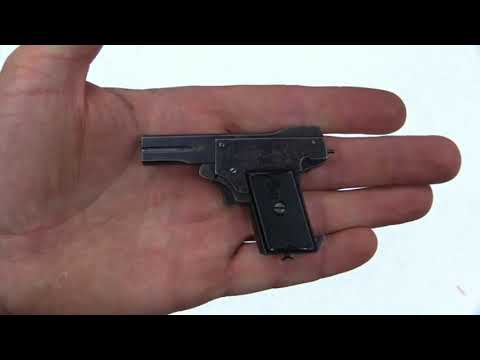
Inside the World's Smallest Cartridges: 2.7mm Kolibri

Published on January 1, 2026
Duration: 1:27

This video provides an in-depth look at the extremely rare 2.7mm Kolibri pistol, designed by Franz Pfannl. It details the pistol's unique status as the smallest centerfire cartridge firearm, its historical context around WWI, and its technical specifications, including projectile weight, muzzle velocity, and energy. The presentation also covers the pistol's accessories and its limited production run.

Quick Summary

The 2.7mm Kolibri is famous for firing the world's smallest centerfire cartridge. Designed by Franz Pfannl, it fires a 3-grain projectile at 650 fps, producing 3 ft-lbs of energy. Approximately 1,000 units were made before WWI production shifts halted its manufacturing.

Chapters

  1. 00:00Introduction & Scale
  2. 00:11Production History
  3. 00:23Design and Branding
  4. 00:38Weight and Accessories
  5. 01:09Ammunition Details

Frequently Asked Questions

What makes the 2.7mm Kolibri unique?

The 2.7mm Kolibri is renowned for firing the world's smallest centerfire cartridge. It was designed by Franz Pfannl and produced in very limited numbers before World War I, making it a significant historical firearm.

What are the performance specifications of the 2.7mm Kolibri?

The 2.7mm Kolibri fires a 3-grain projectile at approximately 650 feet per second, generating about 3 foot-pounds (4 Joules) of muzzle energy. Its loaded weight is 7.7 ounces.

Who designed the 2.7mm Kolibri and what does its name mean?

The 2.7mm Kolibri pistol was designed by Franz Pfannl. The name 'Kolibri' is German for hummingbird, aptly describing the pistol's exceptionally small size.

How many 2.7mm Kolibri pistols were made?

It is estimated that only around 1,000 units of the 2.7mm Kolibri pistol were manufactured. Production ceased as manufacturing facilities shifted towards military arms production for World War I.

More General Videos You Might Like

More from Forgotten Weapons

View all →