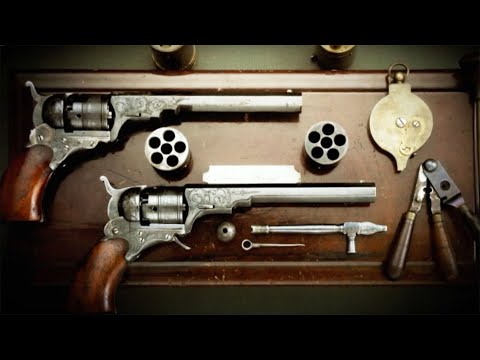
Who is Colt? A History of the Colt Patent Firearms Manufacturing Company

Published on February 23, 2017
Duration: 32:57

This video chronicles the nearly 200-year history of the Colt Patent Firearms Manufacturing Company, from Samuel Colt's initial inspiration and patent struggles to the company's rise as a major arms producer. It details key models like the Paterson, Walker Colt, and 1911, highlighting periods of innovation, financial hardship, and diversification. The narrative concludes with Colt's modern reliance on legacy products and reproductions.

Quick Summary

Samuel Colt's key innovation was linking hammer cocking to automatic cylinder rotation and locking. Despite early failures of the Paterson model due to cost and reliability issues, Colt's success was reborn with the Walker Colt and later solidified by the Hartford armory and iconic models like the 1911.

Chapters

  1. 00:00Introduction to Colt's History
  2. 00:48Samuel Colt's Early Life and Inspiration
  3. 02:38Patents and Early Prototypes
  4. 04:18The Paterson Company and Initial Failure
  5. 07:24The Walker Colt and Rebirth
  6. 10:12The Hartford Armory and Golden Age
  7. 13:01Legacy of Innovation and Famous Employees
  8. 16:46The Browning Partnership and Diversification
  9. 19:54Labor Troubles and Corporate Decline
  10. 22:55Modern Era and Legacy Products

Frequently Asked Questions

What was Samuel Colt's key innovation in revolver design?

Samuel Colt's primary innovation was linking the hammer cocking mechanism to the automatic rotation and locking of the cylinder. This system significantly improved the speed and reliability of revolvers compared to earlier designs.

Why did the Colt Paterson revolver initially fail?

The Colt Paterson revolvers were revolutionary but suffered from a lack of interchangeable parts, high manufacturing costs, and unreliability, particularly due to black powder fouling. These issues led to the company's bankruptcy in 1842.

What marked the rebirth of Colt's success after the Paterson failure?

Colt's success was reignited by the demand for a perfected revolver from Captain Samuel Walker of the Texas Rangers, leading to the development of the massive .44 caliber Walker Colt in 1847.

How did Colt diversify after World War I?

Following a decline in military contracts after WWI, Colt sought to diversify its business by venturing into the manufacturing of appliances, electronics, and plastics, though these ventures met with mixed success.

Related News

All News →

More General Videos You Might Like

More from Forgotten Weapons

View all →