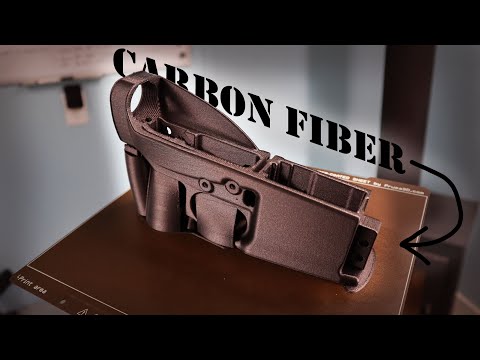
A Look At Hoffman Tactical's 3D Printing Setup

Published on March 24, 2021
Duration: 5:11

This video details Hoffman Tactical's 3D printing setup for producing firearm components. It covers the use of three Prusa i3 MK3S+ printers, filament management with 3kg spools from Busch Plastic, and a unique front-feeding technique to prevent print head twisting. The setup also includes plans for fume containment and discusses nozzle size choices for different applications.

Quick Summary

Hoffman Tactical utilizes three Prusa i3 MK3 3D printers, managing 3kg filament spools in repurposed cake holders. A key technique involves feeding filament from the front at an angle to prevent print head twisting and ensure print accuracy.

Chapters

  1. 00:00Introduction to 3D Printing Setup
  2. 00:03Printer Configuration: Prusa i3 MK3
  3. 00:18Filament Sourcing and Types
  4. 00:45Filament Spool Management Pods
  5. 01:12Filament Feeding Technique
  6. 02:44Potential Improvements for Filament Pods
  7. 03:25Fume Containment Hood and Ventilation
  8. 03:50Nozzle Size and Applications
  9. 04:17Future Nozzle Upgrades (Ruby Nozzle)
  10. 04:36Filament Drying and Desiccant
  11. 04:51Professional 3D Print Setup Advice

Frequently Asked Questions

What 3D printers does Hoffman Tactical use for their setup?

Hoffman Tactical primarily uses three Prusa i3 MK3 printers, including the latest 'plus' edition. These printers are known for their reliability and quality in producing complex parts.

How does Hoffman Tactical manage large 3kg filament spools for 3D printing?

They use repurposed cupcake or cake holders as pods to store 3kg filament spools. These pods fit the spools perfectly and help maintain filament dryness, which is crucial for print quality.

What is the unique filament feeding technique used by Hoffman Tactical?

Hoffman Tactical feeds filament from the front of the printer at an angle. This method aligns the filament's pull force with the print head's rotation axis, preventing twisting and improving print accuracy by reducing artifacts.

What are the nozzle size recommendations for different 3D printing applications?

A 0.8mm nozzle is used for larger, less dimensionally critical parts, while a 0.4mm nozzle is standard for higher detail. A ruby 0.4mm nozzle is recommended for printing abrasive filaments.

More Gunsmithing & DIY Videos You Might Like

More from Hoffman Tactical

View all →