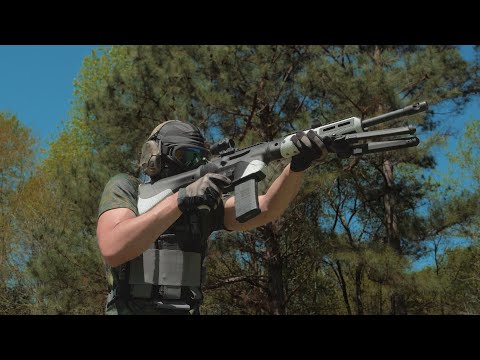
This guide details the process of testing the durability of a 3D-printed Glock 19 Gen 5 frame, focusing on its performance with carbon fiber nylon filament. It covers initial range testing, accessory integration, and high-volume suppressed fire to assess structural integrity under heat and stress. The assessment highlights the material's potential and limitations, as demonstrated by an expert in the 3D-printed firearms community.
This video from PSR addresses YouTube's content policies regarding 3D printed firearms, detailing recent strikes and the channel's strategy to adapt by re-uploading edited content. It also teases upcoming reviews and modifications, showcasing a range of firearms from 3D printed Glocks to production models like the FN SCAR 17 and CZ Shadow 2 Orange. The host demonstrates high authority in the DIY and 3D printed firearms community, offering insights into content creation challenges and firearm technology.
This guide synthesizes expert analysis from Hoffman Tactical on selecting 3D printing filaments for firearm components. It details material properties like stiffness, moisture resistance, yield strength, and creep, comparing common options like Carbon Fiber Nylon, PLA Pro, and PET-CF. The information is crucial for users aiming to print reliable and durable firearm parts, emphasizing the trade-offs between different materials based on extensive testing data.
This guide details the assembly and testing of the 3D-printed Orca AR-15, designed by Hoffman Tactical. It covers the use of specific materials like PLA Pro and Carbon Fiber Nylon, structural reinforcement techniques with hose clamps, and the installation of a high-speed trigger. The video demonstrates impressive accuracy at 300 yards, showcasing the potential of 3D-printed firearm platforms when engineered with expertise.
This video details observations from a 600-round test of two 'Orca' 3D-printed firearms, one in PLA Plus and one in Carbon Fiber Nylon. Key takeaways include the failure susceptibility of polycarbonate clips, the thermal limitations of PLA Plus leading to malfunctions, and interesting insights into brass ejection dynamics.
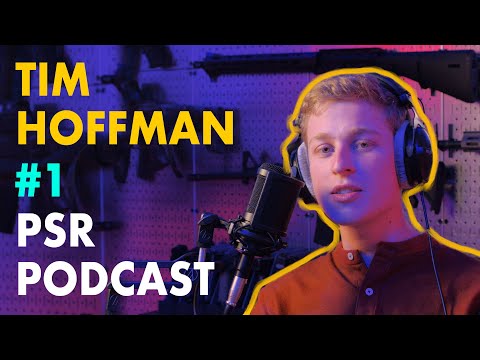
Tim Hoffman of Hoffman Tactical discusses his journey designing 3D-printable firearms, focusing on AR-15 and LR-308 lower receivers and the fully 3D-printed Orca AR-15. He highlights the importance of material testing, design for additive manufacturing, and the use of hose clamps for structural reinforcement in his designs. The conversation also touches on the broader implications of distributed weapon systems, AI in warfare, and the challenges within the regulated firearms industry.
This guide details the construction of the Orca, a 3D-printed AR-15 variant, as presented by Hoffman Tactical. It emphasizes using specific filaments like Polymaker PLA Pro for general parts and Polycarbonate or Carbon Fiber Nylon for critical components requiring heat resistance and strength. Key design features include an angled magazine feed for reliability and innovative heat management for the barrel mount. The project aims to maximize the use of 3D-printed parts on a standard printer, with version 5.3 now released and community feedback encouraged for ongoing improvements.
This guide details the assembly and testing of a 3D printed AR-15 by Hoffman Tactical. It covers the use of specific polymers like PLA+ and carbon fiber nylon, design innovations such as integrated components and a clamshell barrel mount, and troubleshooting common issues like ejection failures and heat-induced accuracy degradation. The process highlights the experimental nature of 3D printed firearms and the importance of material selection for performance.
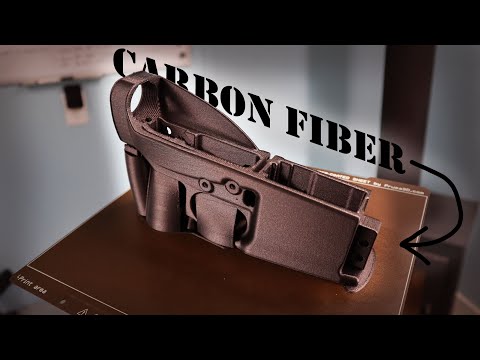
This guide details the process of 3D printing an AR-15 lower receiver using Carbon Fiber Nylon, based on expert instruction from Hoffman Tactical. It covers essential filament preparation, specific printer hardware requirements, critical print settings, advanced slicing techniques for warp prevention, and post-processing steps. The instruction emphasizes the importance of material science knowledge for successful and durable firearm component printing.
You've reached the end! 9 videos loaded.
Gun Laws by State
Read firearms regulations for all 50 states + D.C.
Find Gun Dealers
Search licensed FFL dealers near you.