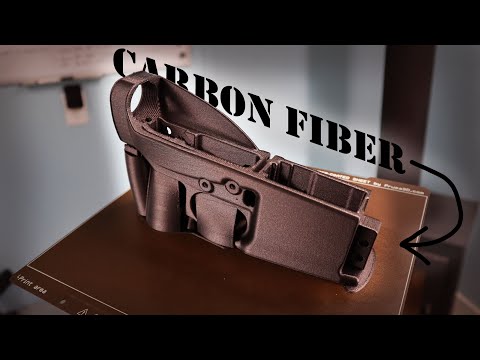
I Printed an AR-15

Published on September 18, 2022
Duration: 24:57

This project details the construction of a 3D printed AR-15, focusing on reducing cost and weight. Key innovations include a clamshell barrel mount, integrated buffer tube and grip, and dovetail takedown pins. While functional for basic use, the PLA+ upper receiver experiences significant accuracy degradation under sustained fire due to heat, highlighting the need for more heat-resistant materials like carbon fiber nylon for critical components.

Quick Summary

The 3D printed AR-15 project utilized PLA+ and carbon fiber nylon, featuring innovations like a clamshell barrel mount and integrated grip. While initially accurate, PLA+ upper receivers softened under heat, causing significant accuracy loss during sustained fire, necessitating stronger materials like carbon fiber nylon.

Chapters

  1. 00:35Project Overview & Goals
  2. 01:17Non-Printed Components Used
  3. 02:06Innovative Design Features
  4. 05:51Design Inspirations & Credits
  5. 08:41Range Testing: Ejection Issues
  6. 14:30Accuracy & Heat Management Problems

Frequently Asked Questions

What materials were used for the 3D printed AR-15 build?

The build primarily used PLA+ for exterior components and carbon fiber nylon for internal parts requiring higher strength and heat resistance. Polycarbonate was also mentioned as a potential material.

What were the main design innovations in this 3D printed AR-15?

Key innovations include a clamshell barrel mount replacing the barrel nut, an integrated buffer tube and pistol grip, and dovetail takedown pins secured by a single screw, aiming to reduce weak points and complexity.

What issues were encountered during the range testing of the 3D printed AR-15?

Initial testing showed ejection failures, possibly due to a budget BCG's weak ejector and the printed brass deflector's geometry. Significant accuracy degradation occurred after sustained fire due to PLA+ softening.

How did heat affect the accuracy of the 3D printed AR-15?

The PLA+ upper receiver softened significantly when heated by sustained fire (around 130°F), causing accuracy to drop by as much as 12 inches at 100 yards after a 25-round magazine dump.

Related News

All News →

More Gunsmithing & DIY Videos You Might Like

More from Hoffman Tactical

View all →