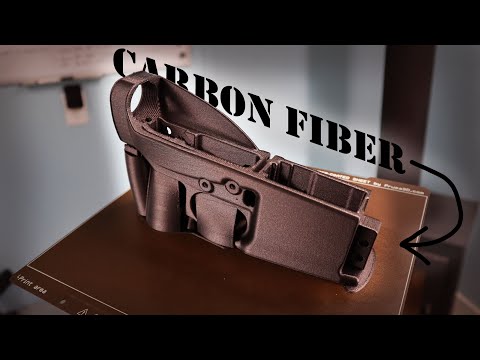
I Printed an AR-15

Published on September 18, 2022
Duration: 24:57

This guide details the assembly and testing of a 3D printed AR-15 by Hoffman Tactical. It covers the use of specific polymers like PLA+ and carbon fiber nylon, design innovations such as integrated components and a clamshell barrel mount, and troubleshooting common issues like ejection failures and heat-induced accuracy degradation. The process highlights the experimental nature of 3D printed firearms and the importance of material selection for performance.

Quick Summary

Hoffman Tactical's 3D printed AR-15 project explores material science and design innovation, using PLA+ and Carbon Fiber Nylon. Key features include a clamshell barrel mount and integrated receiver components. Testing revealed ejection issues and significant accuracy degradation due to PLA+ heat sensitivity, highlighting the need for robust materials like Carbon Fiber Nylon for critical parts.

Chapters

  1. 00:35Project Overview
  2. 01:17Non-Printed Components
  3. 02:06Design Innovations
  4. 05:51Design Inspirations
  5. 08:41Range Testing and Ejection Issues
  6. 14:30Accuracy and Heat Management

Frequently Asked Questions

What materials are used in the Hoffman Tactical 3D printed AR-15?

The Hoffman Tactical 3D printed AR-15 utilizes PLA+ for exterior components and Carbon Fiber Nylon for internal parts. Polycarbonate may also be used. This material selection impacts the firearm's performance, particularly its heat resistance and structural integrity during firing.

What are the main design innovations in this 3D printed AR-15?

Key innovations include eliminating the barrel nut in favor of a clamshell mount, integrating the buffer tube and pistol grip directly into the receiver, and replacing traditional takedown pins with a dovetail and lug system secured by a single screw.

What issues were encountered during testing of the 3D printed AR-15?

Testing revealed ejection failures, potentially due to the budget BCG's ejector or the printed brass deflector's geometry. Accuracy also degraded significantly after sustained firing due to PLA+ softening from heat.

What is the recommended material for the upper receiver of a 3D printed AR-15?

For sustained fire and better heat management, Carbon Fiber Nylon is recommended for the upper receiver over materials like PLA+. This choice helps maintain structural integrity and accuracy when the firearm heats up.

Related News

All News →

More Gunsmithing & DIY Videos You Might Like

More from Hoffman Tactical

View all →