Annealing Nylon Prints In Oil to Prevent Moisture Absorption? Testing the Taulman Glass Fiber Nylon.

Published on August 27, 2022
Duration: 20:07

This video details a study on Taulman Glass Fiber Nylon's properties after various annealing and moisture exposure treatments. The presenter, an experienced 3D printing enthusiast, tests how air annealing, oil annealing, and ambient humidity affect the material's tensile strength and stiffness. The findings suggest that while annealing improves nylon's properties, moisture significantly degrades them, and oil annealing can mitigate some moisture absorption effects.

Quick Summary

Moisture severely degrades the tensile strength and stiffness of 3D printed nylon, making it impractical for many applications. Annealing, both in hot air and oil, increases nylon's strength and stiffness. Oil annealing appears to mitigate moisture absorption, resulting in better performance after humidity exposure compared to raw or air-annealed nylon.

Chapters

  1. 00:00Introduction: Stress-Strain Curve & Study Goals
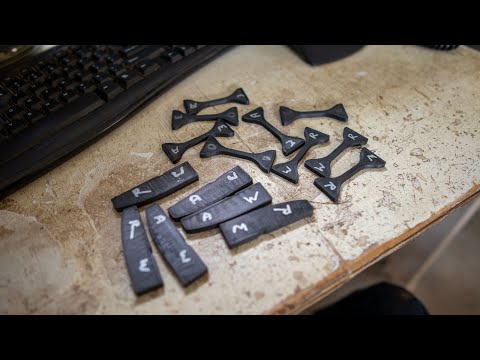
  2. 00:10Nylon Material & Testing Setup
  3. 01:04Sample Preparation: Control, Air Annealing, Oil Annealing
  4. 02:00Moisture Conditioning & Final Sample Sets
  5. 02:57Oil Type & Tensile Testing Method
  6. 04:00PLA Pro Benchmark
  7. 05:02Understanding Stress-Strain Curves
  8. 06:35Young's Modulus Explained
  9. 07:10Yield Point Identification
  10. 08:01Ultimate Tensile Strength Results (Dry vs. Wet)
  11. 10:40Young's Modulus Results (Stiffness)
  12. 12:06Yield Point Comparison
  13. 13:46Stress-Strain Curves: Wet Samples Analysis
  14. 16:42Practical Implications for 3D Printed Parts
  15. 17:23Summary of Key Takeaways
  16. 18:53Future Testing & Conclusion

Frequently Asked Questions

How does moisture affect the strength of 3D printed nylon?

Moisture significantly degrades the tensile strength and stiffness of 3D printed nylon. In tests, raw nylon's strength dropped to less than half its dry value, making it comparable to weaker materials like ABS or PETG and impractical for many functional parts.

Can annealing improve 3D printed nylon's properties?

Yes, annealing Taulman Glass Fiber Nylon, whether in hot air or oil, increases its tensile strength and stiffness. This improvement is observed both when the nylon is dry and after it has absorbed moisture.

Does oil annealing prevent moisture absorption in 3D printed nylon?

Oil annealing appears to improve nylon's resistance to moisture absorption. The oil fills some of the spaces within the nylon, preventing as much water from entering and degrading the material, leading to better performance after exposure to humidity.

How does Taulman Glass Fiber Nylon compare to PLA Pro in strength?

When dry, Taulman Glass Fiber Nylon exhibits higher tensile strength (12,000-14,000 PSI) than PolyMaker PLA Pro (around 8,400 PSI). However, after moisture absorption, the nylon becomes significantly weaker than PLA Pro.

More Gunsmithing & DIY Videos You Might Like

More from Hoffman Tactical

View all →