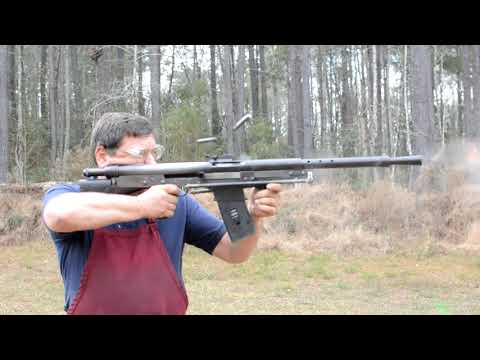
Anvil 104: Colt/ Burgess "Light Carbine" resurrection

Published on September 24, 2021
Duration: 57:13

This video details the meticulous restoration of a rare Colt/Burgess 'Light Carbine' lever-action rifle. Mark Novak highlights the rifle's historical significance, its lightweight design achieved through receiver milling, and common structural weaknesses in the Burgess action. The restoration process involves careful disassembly, rust conversion techniques, and troubleshooting internal component issues to preserve the original finish and functionality.

Quick Summary

The Colt/Burgess 'Light Carbine' is a rare, lightweight rifle weighing around 5 lbs, achieved by milling its receiver. Its designer, Andrew Burgess, also photographed Abraham Lincoln. Restoration requires extensive pre-lubrication and careful disassembly due to potential structural weaknesses.

Chapters

  1. 00:00Introduction: Rare Colt/Burgess Rifle & Lincoln Photo
  2. 01:24Assessing the 'Light Carbine' & Pre-Lubrication Strategy
  3. 03:46Tang & Stock Disassembly Techniques
  4. 08:30Magazine Tube & Thin Barrel Removal
  5. 13:32Forend Removal & Addressing Structural Weakness
  6. 16:14Internal Action & Toggle-Link Design Explained
  7. 21:15Bolt/Carrier Extraction & Heat Trick for Screws
  8. 23:57Rust Conversion & Preserving Original Bluing
  9. 25:56Range Testing, Troubleshooting & Repair

Frequently Asked Questions

What makes the Colt/Burgess 'Light Carbine' historically significant?

The Colt/Burgess 'Light Carbine' is notable for its lightweight design, achieved by milling the receiver, and its connection to Andrew Burgess, the photographer of Abraham Lincoln.

What is the recommended preparation for disassembling a rare antique rifle like the Burgess?

It's crucial to pre-lubricate all screws with a penetrating oil like Kroil for at least a week before disassembly to prevent damage to aged and potentially brittle components.

What are common structural weaknesses found in the Burgess rifle design?

The Burgess design often exhibits thin milling in the wooden forend to accommodate the loading gate, making it susceptible to cracking. The barrel is also notably thin.

What advanced techniques does Mark Novak use for restoring antique firearms?

Novak employs techniques such as using localized heat from a soldering iron to free corroded screws and a rust conversion method to preserve original finishes rather than stripping to bare metal.

Related News

All News →

More Gunsmithing & DIY Videos You Might Like

More from Mark Novak

View all →