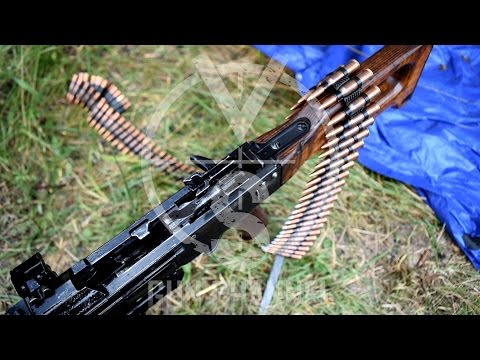
Binary Trigger Setup in an RPK

Published on May 27, 2020
Duration: 10:15

This guide details the installation of the Franklin Armory BFSIII AK-C1 binary trigger into an RPK-style rifle (AES-10B). It covers unboxing, installation steps, function checks in Safe, Semi, and Binary modes, and crucial safety considerations like suppressor bore alignment. The video emphasizes that binary triggers remain NFA-compliant semi-automatic devices, not machine guns.

Quick Summary

The Franklin Armory BFSIII AK-C1 binary trigger fires one round on trigger pull and another on trigger release, significantly increasing rate of fire. It is legally classified as semi-automatic, not a machine gun. Proper installation on an RPK (AES-10B) requires function checks and, with a suppressor, a bore alignment check to prevent baffle strikes.

Chapters

  1. 00:00Unboxing and Introduction
  2. 00:45Shooting Demonstration
  3. 02:04Trigger Modes Explained
  4. 03:31RPK Model and Suppressor Issues
  5. 05:01Practical Application and NFA
  6. 07:38Technical Limitations: Hammer Follow

Frequently Asked Questions

What is a binary trigger and how does it work on an RPK?

A binary trigger, like the Franklin Armory BFSIII AK-C1, fires one round when the trigger is pulled and another when the trigger is released. This allows for a significantly higher rate of fire compared to a standard semi-automatic trigger, and it's installed in an RPK-style rifle like the AES-10B.

Is a binary trigger considered a machine gun?

No, binary triggers are legally classified as semi-automatic firearms under the NFA and GCA. They fire only one round per function of the trigger mechanism (pull and release), not continuously as a machine gun does.

What safety checks are needed when installing a binary trigger on an RPK?

Essential safety checks include ensuring the firearm is unloaded during installation, performing a function check across all selector positions (Safe, Semi, Binary), and, if using a suppressor, conducting a bore alignment check to prevent baffle strikes.

What are the limitations of a binary trigger?

A key limitation is 'hammer follow.' If the trigger is pulled too rapidly, the bolt carrier can outrun the hammer, causing a temporary dead trigger until the action fully cycles. This means the trigger cannot be pulled infinitely fast.

Related News

All News →

More Gunsmithing & DIY Videos You Might Like

More from The VSO Gun Channel

View all →