Britain’s Forgotten Silencer Rifle: The Suppressed Lee-Enfield with firearm expert Jonathan Ferguson

Published on October 22, 2025
Duration: 25:23

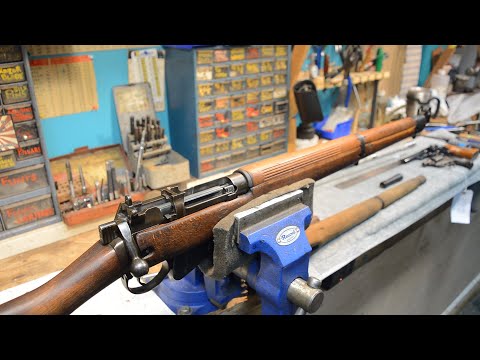
This guide details the disassembly of a Parker-Hale Model 1929 Maxim-pattern silencer, as demonstrated by Jonathan Ferguson of the Royal Armouries. It covers the identification of components like the expansion chamber and the ten baffles, explaining their function in reducing muzzle blast. The information is presented with expert authority, highlighting historical context and technical specifics of this unique suppressed firearm.


Quick Summary

Jonathan Ferguson, Keeper of Firearms & Artillery at the Royal Armouries, details the Suppressed Lee-Enfield Mk.1* and its Parker-Hale Model 1929 Maxim-pattern silencer. The device uses ten baffles to slow gases, muffling the sound. Despite initial military skepticism and trial issues, modern doctrine now standardizes suppressors for signature reduction.

Chapters

  1. 00:00Introduction to the 'Long Lee'
  2. 02:28Suppressor vs. Silencer Terminology
  3. 04:40Internal Mechanics of the Maxim Silencer
  4. 07:41Historical British Military Trials
  5. 11:51Accuracy and Performance Findings
  6. 18:48Modern Suppressor Integration

Frequently Asked Questions

What is the significance of the Suppressed Lee-Enfield Mk.1* discussed by Jonathan Ferguson?

The Suppressed Lee-Enfield Mk.1* is a rare example of early suppressed firearm technology, featuring a Parker-Hale Model 1929 Maxim-pattern silencer. It highlights historical British military trials and the evolution of suppressor technology from initial skepticism to modern integration.

How does the Parker-Hale Maxim silencer work internally?

The Parker-Hale Model 1929 Maxim silencer features an expansion chamber followed by ten cup-shaped baffles. These baffles have ports designed to swirl and slow down expanding gases, reducing pressure and muffling the sound of the gunshot.

Why were suppressors initially rejected by the British military?

Early British military trials in 1909 found suppressors unsatisfactory due to excessive weight, rapid heating, and failure to eliminate the supersonic crack. Officials were also skeptical of their tactical value, given the reliance on volley fire and bayonet charges.

How has the military's view on suppressors changed from the Lee-Enfield era to modern times?

Historically, the British military avoided standard-issue suppressors for over a century. Today, modern rifles like the L403A1 (Knight's Armament KS-1) come standard with quick-detach suppressors, reflecting a doctrinal shift towards signature reduction and improved communication.

More Gunsmithing & DIY Videos You Might Like

More from Royal Armouries

View all →