Chatellerault M24/29: France's New Wave of Post-WWI Small Arms

Published on August 26, 2017
Duration: 21:39

This guide details the field stripping process for the Châtellerault M24/29 light machine gun, as demonstrated by Ian McCollum. It covers the simple removal of the buttstock, trigger group, and the bolt/gas piston assembly. The video highlights the weapon's design evolution and historical context following WWI.

Quick Summary

The Châtellerault M24/29 is a French light machine gun featuring a gas-operated, tilting bolt action and firing the 7.5x54mm French cartridge. Field stripping is simplified by a single pin release for the buttstock and trigger group, allowing the bolt assembly to slide out. It was developed post-WWI to replace older designs and improve reliability over cartridges like the 8mm Lebel.

Chapters

  1. 00:05Introduction & French Rearmament
  2. 01:00Post-WWI Arms Needs
  3. 02:10Trials and Competitors
  4. 03:55Design Philosophy
  5. 05:19Cartridge Development (7.5x54mm)
  6. 06:34M24 to M24/29 Transition
  7. 08:45External Features & Controls
  8. 10:08Sights and Dust Covers
  9. 11:44Ergonomics and Weight
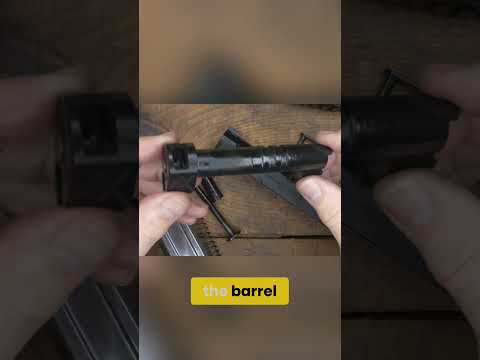
  10. 13:46Field Stripping Procedure
  11. 15:18Internal Mechanics & Bolt Action
  12. 20:17Production and Legacy

Frequently Asked Questions

What is the Châtellerault M24/29?

The Châtellerault M24/29 is a French light machine gun designed after World War I. It features a gas-operated, tilting bolt action and fires the 7.5x54mm French cartridge. It was developed to meet France's need for modern infantry support weapons.

How is the Châtellerault M24/29 field stripped?

Field stripping involves removing a single threaded pin to detach the buttstock and trigger group. The bolt, gas piston, and operating rod then slide out as one unit from the receiver. This process is designed for simplicity and ease of maintenance in the field.

Why was the 7.5x54mm cartridge developed for the M24/29?

The 7.5x54mm French cartridge was created to replace the older 8mm Lebel. The Lebel's rimmed and tapered case was problematic for reliable feeding in automatic weapons. The new cartridge offered improved performance and reliability for light machine guns like the M24/29.

What were the main competitors to the Châtellerault M24/29 during French trials?

During French trials in 1923, various light machine guns were tested, including the Hotchkiss, Vickers-Berthier, BAR, Madsen, and Lewis guns. The BAR was initially favored, but high licensing costs led France to develop its own weapon.

Related News

All News →

More Gunsmithing & DIY Videos You Might Like

More from Forgotten Weapons

View all →