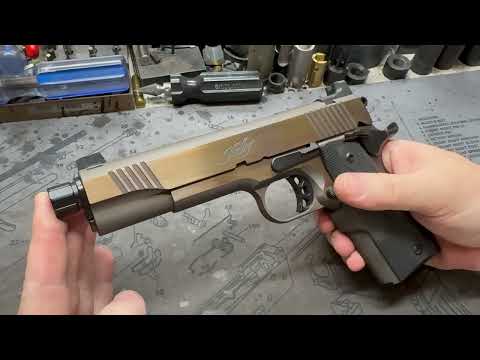
Custom 1911, How It's Built. weaponseducation

Published on October 19, 2012
Duration: 16:44

This video details the meticulous process of building a custom 1911 by Bernie at CSC Arms. It highlights the significant difference in quality and accuracy achieved through extensive hand-fitting of oversized components, contrasting it with mass-produced firearms. Key steps include precise frame and slide fitting, barrel and bushing alignment, trigger work for a crisp pull, and finishing with Cerakote for durability.

Quick Summary

Custom 1911 builds require 40-50 man-hours for meticulous hand-fitting of oversized components, achieving tight tolerances and superior accuracy. This process includes precise frame/slide fitting, barrel work, and trigger tuning for a crisp pull, often finished with durable Cerakote.

Chapters

  1. 00:00Introduction to CSC Arms Custom 1911
  2. 02:37Custom vs. Mass-Produced Firearms Explained
  3. 03:12Frame and Slide Fitting Process
  4. 05:19Sights and Barrel Bushing Alignment
  5. 06:26Precision Barrel Fitting Techniques
  6. 07:56Achieving a Crisp 3.5lb Trigger Pull
  7. 08:54Tuning Small Parts: Mag Release, Ejector, Safety
  8. 11:09Grip Safety, Extractor, and Slide Serrations
  9. 12:37Recessed Barrel Crown Benefits
  10. 13:38Cerakote Finishing: Prep and Application
  11. 15:41Custom 1911 Build Time and Cost

Frequently Asked Questions

What is the difference between a custom and a mass-produced 1911?

Custom 1911s involve extensive hand-fitting of oversized components, requiring 40-50 man-hours for precise calibration to achieve tight tolerances and superior accuracy, unlike mass-produced guns.

How is a tight slide-to-frame fit achieved on a custom 1911?

A tight fit is achieved by starting with oversized forged steel frame and slide components from CNC machines, which are then meticulously hand-filed and fitted by a gunsmith to ensure minimal play.

What kind of trigger pull can be expected from a custom 1911 build?

A custom 1911, like the one built by CSC Arms, can achieve a crisp 3.5-pound trigger pull after 4-5 hours of dedicated work on the sear and hammer components.

What are the benefits of a recessed barrel crown on a 1911?

A recessed barrel crown, also known as a flush-cut deep-dish crown, protects the barrel's rifling if the firearm is dropped and ensures a more consistent gas release upon firing, improving accuracy.

Related News

All News →

More Gunsmithing & DIY Videos You Might Like

More from Weapons Education

View all →