Dreyse/Kufahl Needlefire Revolver

Published on February 26, 2015
Duration: 7:17

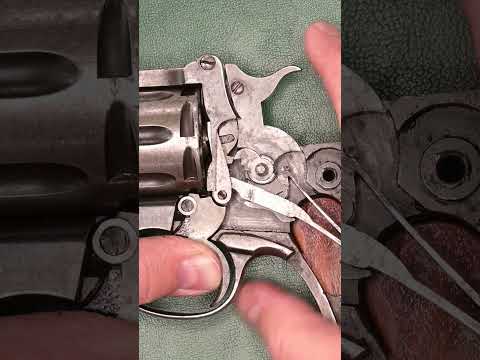
This guide provides an overview of the Dreyse/Kufahl Needlefire Revolver's mechanical operation, focusing on its unique needlefire ignition system and double-action mechanism. It highlights common failure points and historical context, drawing from expert analysis.

Quick Summary

The Dreyse/Kufahl Needlefire Revolver features a unique ignition system where a long needle pierces a paper cartridge to strike a primer. Marked as .39 Prussian caliber (approx. .43 Imperial), its 'F.v. Dreyse' marking dates it post-1864. Needles were prone to breakage due to powder exposure.

Chapters

  1. 00:00Introduction to Dreyse/Kufahl Revolver
  2. 00:31Needlefire Technology Explained
  3. 01:20Design Flaws and History
  4. 02:47Dating and Markings
  5. 03:29Caliber and Measurements
  6. 04:35Mechanical Operation

Frequently Asked Questions

What is a needlefire ignition system?

A needlefire system is an early breech-loading firearm technology where a long, thin needle pierces a paper cartridge to strike a primer located at the base of the bullet, igniting the powder charge.

Why were Dreyse/Kufahl needles prone to breaking?

The long, slender needles were exposed to the direct force and heat of the exploding powder charge, making them susceptible to breakage during firing. This was a common design flaw.

How is the caliber of the Dreyse/Kufahl revolver determined?

The revolver is marked with a '.39' caliber, which refers to Prussian inches. This measurement is approximately equivalent to a .43 caliber bore in the standard Imperial inch system.

What does the 'F.v. Dreyse' marking signify?

The 'F.v. Dreyse' marking on the firearm indicates that it was manufactured after 1864. This is because Franz von Dreyse added the 'von' to his name after being knighted in that year.

More Gunsmithing & DIY Videos You Might Like

More from Forgotten Weapons

View all →