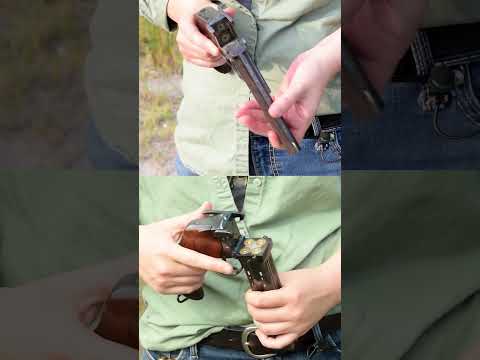
Nagants 1878 & 1886

Published on November 28, 2025
Duration: 3:00

This video provides an expert-level analysis of the internal mechanics of the Belgian Nagant 1878 and 1886 revolvers, comparing their lockwork designs. The speaker, Othais from C&Rsenal, highlights the significant simplification and efficiency improvements in the 1886 model, which utilized fewer springs and an automatic rebound system compared to the more complex 1878. This detailed examination offers valuable insights into early firearm design evolution.


Quick Summary

The Nagant 1886 revolver represents a significant mechanical simplification over the 1878 model. It features a more efficient lockwork design with fewer parts, powered by a single mainspring, and incorporates an automatic rebound system, making it a more streamlined and potentially reliable firearm compared to its predecessor.

Chapters

  1. 00:00Introduction: Nagant 1878 & 1886 vs 1895
  2. 00:251878 Nagant Lockwork Analysis
  3. 01:241886 Nagant Lockwork Analysis
  4. 02:49Conclusion: Mechanical Efficiency

Frequently Asked Questions

What are the key differences in the lockwork between the Nagant 1878 and 1886 revolvers?

The Nagant 1878 features a complex lockwork with over five individual springs for various functions and a manual rebound. In contrast, the Nagant 1886 simplifies this design significantly, using fewer parts and a single mainspring, while also incorporating an automatic rebound system for improved efficiency.

How did the Nagant 1878 and 1886 revolvers influence later designs?

The Belgian Nagant models from 1878 and 1886 served as foundational designs for the later, more famous Russian Nagant 1895 revolver. Although considerably larger, their mechanical principles paved the way for the iconic gas-seal system.

What makes the Nagant 1886's design more efficient than the 1878 model?

The Nagant 1886 achieves greater mechanical efficiency through a simplified lockwork design that utilizes fewer components and a single mainspring. Additionally, its automatic rebound system streamlines the firing cycle compared to the manual rebound of the 1878 model.

What specific internal components are highlighted in the analysis of the Nagant revolvers?

The analysis focuses on the lockwork mechanisms, detailing components such as the trigger, sear, hammer, dog, and hand. The video visually demonstrates the function of these parts and the spring systems within both the Nagant 1878 and 1886 models.

More Gunsmithing & DIY Videos You Might Like

More from C&Rsenal

View all →