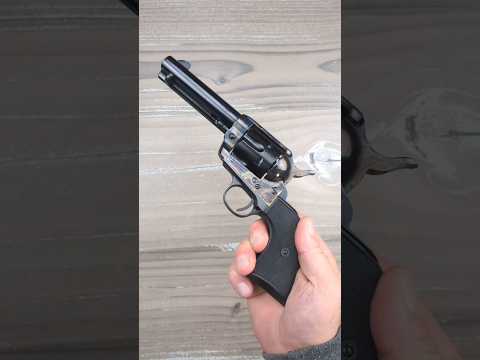
This video explains the fundamental operation of a single-action revolver, emphasizing its user-friendly nature for new shooters and children. It highlights the Heritage Rough Rider as a budget-friendly option with low recoil, making it ideal for learning and recreational shooting.
This guide explains the internal mechanics of double-action and double-action-only (DAO) revolver triggers, building on single-action principles. It details the roles of the trigger, hammer, hammer strut, and mainspring in both firing cycles, emphasizing the simplicity and reliability of revolver mechanisms. Instruction is provided by TheYankeeMarshal, who uses animated graphics to illustrate complex internal firearm operations.
TheYankeeMarshal discusses viewer support and motivation for his YouTube channel, TheYankeeMarshal. He addresses viewer inquiries about firearm mechanics, specifically the presence and function of sears in revolvers, and plans future technical content based on these interactions.
This video reviews the top 5 most popular revolvers based on recent sales data, featuring expert commentary on their features and suitability for various applications. The instructor, an experienced shooter, highlights the Ruger SP101, Heritage Rough Rider, Ruger LCR, Taurus Judge, and Colt Python, offering insights into their performance, mechanics, and value. The list emphasizes market demand over personal preference for concealed carry.
TheYankeeMarshal, demonstrating high expertise with a visible firearm collection, addresses the dilemma of choosing a handgun caliber between 9mm and .357 Magnum. He explains the mechanical differences between revolvers and semi-automatics regarding recoil energy for cycling actions. The discussion highlights the versatility of .357 Magnum revolvers, capable of firing lighter .38 Special loads, and suggests .40 S&W and 10mm as intermediate options.
This video provides an expert overview of a diverse Smith & Wesson J-frame revolver collection, featuring models like the 642, 442, 638, 432UC, 431PD, 351PD, and 43C. The instructor, demonstrating significant expertise, highlights key differences in calibers (.38 Spl +P, .32 H&R Mag, .22 Mag, .22 LR), capacities (5 to 8 shots), hammer types (concealed, shrouded, exposed), and sighting systems. The discussion emphasizes the practical advantages of revolvers for new shooters and in specific self-defense scenarios, such as reliability during malfunctions and contact shots.
This video provides an expert-level breakdown of the Tranter 1879's unique dual cylinder stop and locking bolt system. The instructor, Othais, demonstrates how these mechanisms work in conjunction with the hand and recoil shield to ensure precise cylinder alignment and prevent over-rotation. The explanation highlights the differences compared to other historical revolvers like the Single Action Army, offering valuable insights for firearm enthusiasts and gunsmiths interested in historical firearm mechanisms.
This guide synthesizes expert insights on achieving 'revolver perfection,' emphasizing crisp timing, tight lockup, and consistent trigger feel as paramount for reliability. It covers handling considerations for iconic models like the Colt Python, precision instruments like the Spohr L562 and Manurhin MR73, robust single-actions such as the Freedom Arms Model 83, and modern tactical revolvers like the Korth Ranger NXS. The instruction stresses the importance of regular practice with a trusted firearm.
TheFirearmGuy provides an expert review of the Taylor's & Company TC9 1873, a 9mm single-action revolver. He highlights its appeal to 9mm semi-auto owners due to ammunition commonality and cost savings, as well as its attractive color case hardened finish and affordable price point under $500. The review emphasizes the revolver's suitability for those seeking a classic shooting experience with modern ammunition advantages.
This video provides an expert-level analysis of the internal mechanics of the Belgian Nagant 1878 and 1886 revolvers, comparing their lockwork designs. The speaker, Othais from C&Rsenal, highlights the significant simplification and efficiency improvements in the 1886 model, which utilized fewer springs and an automatic rebound system compared to the more complex 1878. This detailed examination offers valuable insights into early firearm design evolution.
Hickok45 discusses the Nighthawk Custom 1911 and Ruger Police Service Six revolvers, sharing insights on their performance and historical context. He also offers commentary on YouTube algorithms, the challenges faced by restaurant chains like Cracker Barrel due to demographic shifts, and the importance of staying true to one's core product. The video emphasizes practical shooting and thoughtful business strategy.
The Adams Mark III revolver, weighing 2.33 lb with an 11-inch overall length, is a refined version of its predecessor. Key improvements include a more tactile and faster counter-rotating cylinder for loading and a pair-like ejector rod setup that nests within the arbor at rest. The action remains undemanding with light hammer and trigger pulls.
Gun Laws by State
Read firearms regulations for all 50 states + D.C.
Find Gun Dealers
Search licensed FFL dealers near you.