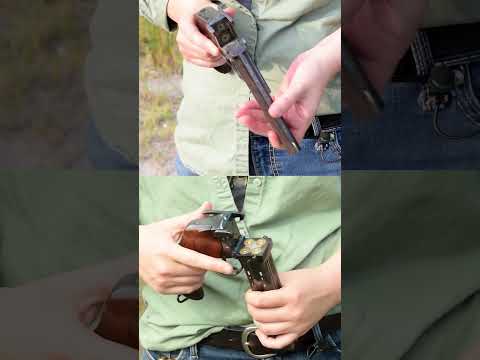
Tranter 1879 Cylinder Stops vs. Locking Bolt Notches

Published on January 28, 2026
Duration: 1:49

This video provides an expert-level breakdown of the Tranter 1879's unique dual cylinder stop and locking bolt system. The instructor, Othais, demonstrates how these mechanisms work in conjunction with the hand and recoil shield to ensure precise cylinder alignment and prevent over-rotation. The explanation highlights the differences compared to other historical revolvers like the Single Action Army, offering valuable insights for firearm enthusiasts and gunsmiths interested in historical firearm mechanisms.

Quick Summary

The Tranter 1879 features a sophisticated dual mechanism for cylinder control: a locking bolt prevents rotation at rest, while a cylinder stop prevents over-travel during rotation. This system, working with the hand and recoil shield, ensures precise alignment, differentiating it from simpler revolver designs.

Chapters

  1. 00:00Introduction to Tranter 1879 Mechanisms
  2. 00:23Trigger Mechanism and 'Nubbens'
  3. 00:44Functional Mechanics: Stop vs. Bolt
  4. 01:07The Hand and Recoil Shield Interaction
  5. 01:21Comparison with Other Revolvers

Frequently Asked Questions

How does the Tranter 1879's cylinder stop differ from its locking bolt?

The Tranter 1879 uses a dual system: the locking bolt prevents cylinder rotation when the firearm is at rest, while the cylinder stop prevents over-travel during rotation, ensuring precise alignment by working with the hand mechanism.

What are the 'nubbens' mentioned in the Tranter 1879 mechanism explanation?

The 'nubbens' are small protrusions located above the trigger in the Tranter 1879's frame. As the trigger is pulled, one nubben retracts, and the other rises to engage the cylinder stop and locking bolt mechanisms, respectively.

What is the role of the hand and recoil shield in the Tranter 1879's operation?

The hand, moving within the recoil shield, pushes the cylinder into its correct rotational position. As the cylinder reaches this position, the cylinder stop engages a beveled surface, ensuring perfect alignment facilitated by the hand's action.

Why is understanding the Tranter 1879's mechanism important for firearm enthusiasts?

Understanding the Tranter 1879's complex dual cylinder stop and locking bolt system provides insight into historical firearm engineering and highlights how different manufacturers solved the challenge of precise cylinder control, offering a contrast to simpler designs.

More Gunsmithing & DIY Videos You Might Like

More from C&Rsenal

View all →