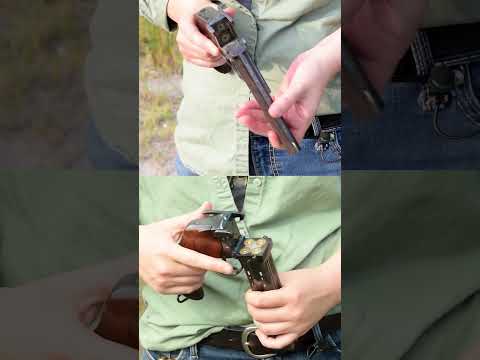
Fagnus Features & Field Strip

Published on March 18, 2026
Duration: 1:40

This guide details the field stripping procedure for the Fagnus revolver, also known as the Maguire revolver, a significant firearm for French Army officers and a precursor to modern revolver lockwork. The expert instruction covers its single and double-action capabilities, unique gate and cylinder detenting, flip-around ejector, and rapid takedown system, culminating in a full disassembly to reveal the 1874-patented lockwork.

Quick Summary

The Fagnus revolver, also known as the Maguire revolver, was patented in 1874 and is considered the father of modern revolver lockwork. It features single and double-action capabilities, an auto-rebounding hammer, a unique gate mechanism for cylinder detenting, a flip-around ejector, and a rapid takedown lever for easier field stripping.

Chapters

  1. 00:00Introduction to Fagnus Revolver
  2. 00:19Action Type Demonstration
  3. 00:34Gate and Cylinder Mechanism
  4. 00:51Rapid Takedown System
  5. 01:12Further Field Strip

Frequently Asked Questions

How do you field strip a Fagnus revolver?

Field stripping the Fagnus revolver involves using its rapid takedown lever to remove the arbor and cylinder. Further disassembly requires opening the hinged side plate and removing the grip to access the lockwork, a process patented in 1874.

What is significant about the Fagnus revolver's design?

The Fagnus revolver is historically significant as the 'father of modern revolver lockwork.' It features an auto-rebounding hammer, a unique gate mechanism for cylinder detenting, and a flip-around ejector, all contributing to its advanced design for its time.

What are the action types of the Fagnus revolver?

The Fagnus revolver operates in both single-action and double-action modes. This allows for a lighter trigger pull in single-action by manually cocking the hammer, or a heavier pull in double-action by simply pulling the trigger.

What is the patent date for the Fagnus revolver?

The Fagnus revolver design was patented in 1874. This patent date highlights its place in the evolution of firearm technology, particularly in revolver mechanisms, and its influence on subsequent designs.

More Gunsmithing & DIY Videos You Might Like

More from C&Rsenal

View all →