History of WWI Primer 097: Belgian Nagant Revolvers Documentary

Published on April 23, 2019
Duration: 65:17

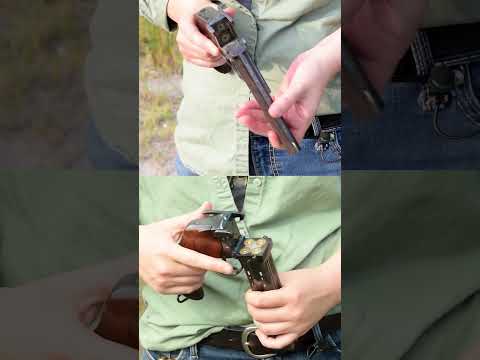
This video provides a detailed guide on the disassembly and reassembly of three Belgian Nagant revolver models: the 1878, 1883, and 1886. It highlights unique features like the 1878's quick disassembly via a hinged trigger guard that releases mainspring tension, and the simplified lockwork of the 1883 and 1886 models. The guide emphasizes careful handling of internal parts and springs during the process.


Quick Summary

The Belgian Nagant Model 1878 features a unique disassembly system where its trigger guard hinges down after removing a screw, releasing mainspring tension. The 1883 and 1886 models offer simplified lockwork, with the 1883 being single-action only and the 1886 incorporating hammer rebound. All models use a 9.4mm black powder cartridge and have a slow gate-loading mechanism, but are considered advanced for their time.

Chapters

  1. 00:00Introduction to Belgian Nagant Revolvers
  2. 00:24Belgian Nagant Model 1878 Overview
  3. 01:13History of the Nagant Brothers
  4. 03:24Early Nagant Designs: Rolling Block Shotguns & Handguns
  5. 05:22Emile Nagant's First Revolver Patent
  6. 05:55The Belgian Military Revolver Trial (1877-1878)
  7. 08:24Nagant Revolver Design Evolution
  8. 09:59Model 1878 Adoption and Features
  9. 11:11Model 1878 Action and Ergonomics
  10. 12:48Model 1878 Disassembly Process
  11. 14:45Model 1878 Internal Action Explained
  12. 17:49Model 1878 Unique Features (King Leopold Crest)
  13. 18:17Model 1878 Animation and Firing Demonstration
  14. 21:13Model 1878 Production and Service Life
  15. 22:08Belgian Nagant Model 1883 Introduction
  16. 23:20Model 1883 Simplified Lockwork and Design
  17. 24:00Model 1883 vs. 1878 Comparison
  18. 25:05Model 1883 Disassembly and Lockwork
  19. 29:39Model 1883 Firing Demonstration
  20. 31:54Model 1883 Production and Service
  21. 32:27Belgian Nagant Model 1886 Introduction
  22. 33:15Model 1886 vs. 1878 Comparison
  23. 34:28Model 1886 Disassembly and Lockwork
  24. 35:14Model 1886 Internal Action Explained
  25. 38:19Model 1886 Firing Demonstration
  26. 39:45Model 1886 Production and Service
  27. 41:12Service Life of Belgian Nagant Revolvers in WWI
  28. 44:26Expert Comparison of the Three Models
  29. 45:06Ergonomic Similarities and Differences
  30. 49:54Trigger Pull Analysis (1878, 1883, 1886)
  31. 56:03Common Faults and Limitations
  32. 58:34Which Model for Battle? Expert Choice
  33. 60:39Overall Assessment and Design Legacy
  34. 63:21Merchandise and Channel Support
  35. 64:21Patreon and Discord Information

Frequently Asked Questions

How do you disassemble the Belgian Nagant Model 1878 revolver?

To disassemble the Model 1878, remove the side plate screw, then gently tap the side plate free. The cylinder is removed by extending the ejector rod, rotating it aside, and pushing a button on the central axis pin. The trigger guard can be pivoted down after removing its screw to de-tension the mainsprings for easier access to internal parts.

What are the key differences between the Belgian Nagant Model 1878, 1883, and 1886 revolvers?

The 1878 is a double-action model with a unique hinged trigger guard for disassembly. The 1883 is single-action only with a simplified lockwork and a longer grip. The 1886 is a refined double-action model incorporating hammer rebound and oval cylinder flutes, representing an evolution of the 1878's design.

What is the significance of the trigger guard on the Belgian Nagant Model 1878?

On the Model 1878, the trigger guard is integral to disassembly. When its retaining screw is removed, the guard hinges down, releasing the tension on the mainsprings and other internal springs. This feature significantly eases the process of accessing the revolver's internal mechanisms for cleaning or repair.

How does the cylinder removal process work on Belgian Nagant revolvers?

To remove the cylinder on Belgian Nagant revolvers, first extend the ejector rod and swing it to the side. Then, locate and press a small button on the central axis pin. Once the button is depressed, the cylinder can be slid out from the frame.

What are the common issues or limitations of the Belgian Nagant revolvers discussed?

Common limitations include their heavy trigger pulls (especially the 1878 double-action and 1883 single-action), slow gate loading process, and the use of a black powder 9.4mm cartridge which, while mild, still produces significant recoil and requires careful ammunition selection for period firearms.

More from C&Rsenal

View all →