How a Rolling Block Operates - The Cycle of Operation | MidwayUSA Gunsmithing

Published on January 13, 2014
Duration: 5:46

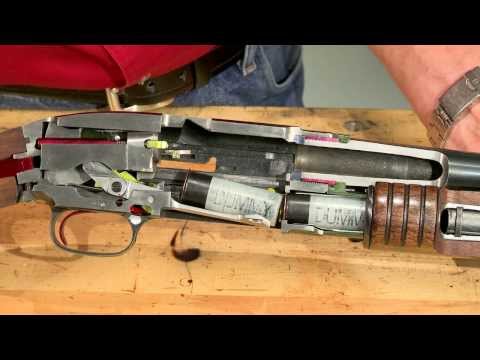
This guide details the operation cycle of a Remington Rolling Block action, as demonstrated by Larry Potterfield. It covers the steps from cocking the hammer to firing and extraction, emphasizing the mechanical interaction of the sear, hammer, and breech block. The video uses a cutaway receiver for clear visualization of these internal mechanics, offering expert insight into this historical firearm design.

Quick Summary

The Remington Rolling Block action operates using a rotating breech block. After cocking the hammer, the block is held by a sear. Opening the block allows for loading, and a trigger pull releases the hammer to fire. The block then rotates down for spent casing extraction. This design, by Joseph Rider, was pivotal for early metallic cartridge firearms.

Chapters

  1. 00:00Introduction to the Remington Rolling Block
  2. 00:10History and Early Development
  3. 00:55Pistol and Sporting Variants
  4. 01:55Smokeless Powder and Calibers
  5. 02:23Disassembly and Cutaway Preparation
  6. 03:55Cycle of Operation

Frequently Asked Questions

How does a Rolling Block firearm operate?

A Rolling Block firearm operates via a rotating breech block. When the hammer is cocked, the block is held by a sear. Opening the block allows loading, and pulling the trigger releases the hammer, which strikes the firing pin, firing the cartridge. The block then rotates down to allow extraction.

Who designed the Rolling Block action?

The Rolling Block action was designed by Joseph Rider during the American Civil War. It was later refined and produced by Remington, becoming one of the earliest successful designs for metallic cartridges.

What are some historical variants of the Rolling Block action?

The Rolling Block action was adapted into various forms, including US Navy and Army pistols in the 1870s, and Remington sporting rifles produced in four different sizes (No. 1 through No. 7) for diverse applications.

Why was the Remington No. 5 action significant?

The Remington No. 5 action was specifically developed to withstand the higher pressures associated with smokeless powder cartridges, such as the .30-30 Winchester and 7mm Mauser, expanding the performance capabilities of Rolling Block firearms.

Related News

All News →

More Gunsmithing & DIY Videos You Might Like

More from MidwayUSA

View all →