This guide details the expert gunsmithing process of sleeving a Peabody rifle's chamber to .45-70 Government, as demonstrated by Mark Novak. The modification involves precise machining on a lathe and milling machine to adapt the breech and extractor for the larger cartridge. Crucially, the rifle is only safe for black powder loads due to structural modifications.
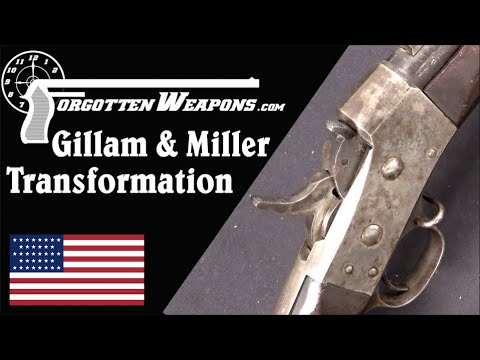
This guide details the complex gunsmithing process of transforming an obsolete muzzle-loading musket, specifically a rare Confederate Gillam & Miller example, into a breech-loading Remington Rolling Block rifle. It covers barrel sleeving, caliber conversion to rimfire, and modifications to the action, highlighting historical context and unique Confederate manufacturing characteristics. The process requires advanced gunsmithing skills and tools.
This guide details the operation of the Barton Jenks Model 1867 Rolling Block rifle, highlighting its unique self-locking mechanism. Unlike the Remington system, the Jenks design automatically recocks the hammer upon breech opening, allowing for faster cycling. The video covers its historical context, mechanical features, and reasons for its failure in trials.
This entry details the Nagant Model 1877 Gendarmerie Double Barrel Rolling Block Pistol, presented by firearms expert Ian McCollum. It covers the pistol's unique double-barrel rolling block action, its historical context with the Nagant brothers and their partnership with Remington, its service with the Belgian Gendarmerie, and its mechanical features. The entry highlights its limited production and specific markings, offering a comprehensive overview for collectors and historians.
This video offers a detailed book review of "Spanish Rolling Block: The Basque Made Rifles of the Third Carlist War." The book, an English translation, delves into the specific history and production of small arms made in the Basque region of Spain during the 1870s, particularly for locally organized volunteers who couldn't acquire arms from the military. It covers variations in Remington Rolling Block designs, pinfire guns, and Snider conversions, highlighting original documents and photographic evidence of subtle model differences from manufacturers like La Escalduna and La Azpeitiana, alongside military contracts from the Oviedo Arsenal.
This entry details the Remington Split Breech Carbine, a precursor to the Rolling Block. It covers its patent history, manufacturing challenges during the Civil War, and its eventual sale as surplus. The video highlights the unique split breech action and compares the .44 and .50 caliber models, offering insights into 19th-century firearm development and military procurement.
This YouTube video features shooting a Remington Rolling Block rifle. The title and description are very brief, indicating a demonstration of the firearm in action. Without a transcript, the analysis relies solely on the firearm model and the activity. The content appears to be a straightforward range or personal shooting session with this historical firearm.
This entry details the 1871 Argentine Remington Rolling Block Carbine, a historical military surplus rifle chambered in .43 Spanish. It covers its operation, historical context, and shooting characteristics, highlighting its surprising accuracy despite its age and crude sights. Instruction is provided by experienced shooters with high authority.
This guide details the operation cycle of a Remington Rolling Block action, as demonstrated by Larry Potterfield. It covers the steps from cocking the hammer to firing and extraction, emphasizing the mechanical interaction of the sear, hammer, and breech block. The video uses a cutaway receiver for clear visualization of these internal mechanics, offering expert insight into this historical firearm design.
This guide details the advanced gunsmithing process for converting a Remington No. 1 Rolling Block rifle from obsolete .32 Rimfire to the more common .32-20 WCF centerfire cartridge. Expert gunsmith Larry Potterfield demonstrates the precise steps, including chamber reaming, breech block modification for centerfire ignition, and fabrication of a new firing pin. The process requires specialized tools and a high level of skill, suitable for experienced gunsmiths.
This guide details the intricate gunsmithing process of recreating George Custer's Rolling Block rifle, as explained by Larry Potterfield. It covers modifying a base action, fabricating custom stocks from American black walnut, and applying period-correct finishes like color case hardening and rust bluing. The process emphasizes meticulous research using historical photographs and documents to achieve an authentic replica.
Larry Potterfield of MidwayUSA demonstrates the process of fitting a curved steel buttplate to a gun stock. The guide details using a spindle sander for shaping, a bar clamp for stability during drilling, and a transfer punch for precise hole placement. Patience and the right tools are emphasized for achieving a correct fit.
Gun Laws by State
Read firearms regulations for all 50 states + D.C.
Find Gun Dealers
Search licensed FFL dealers near you.