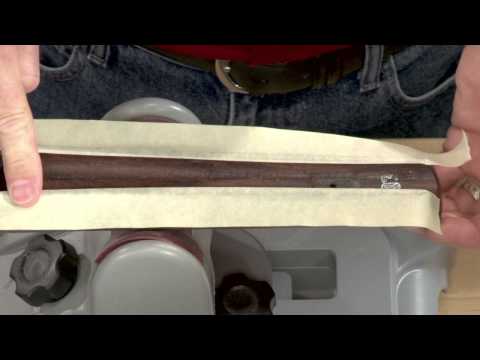
How To Episode 3: Glass Bed Your Mosin Nagant

Published on April 23, 2013
Duration: 14:56

This video details the process of glass bedding a Mosin Nagant rifle to improve accuracy by stabilizing the action. It covers preparing the stock by roughening the tang and recoil lug areas for mechanical bonding, applying a release agent to metal parts, mixing and applying Acraglas bedding compound, and reassembling the action. Proper curing and breaking the action free are emphasized for optimal results.

Quick Summary

Glass bedding a Mosin Nagant improves accuracy by stabilizing the action. Prepare the stock by roughening wood areas for a mechanical bond, apply a release agent to metal parts, then mix and apply Acraglas, ensuring firm screw tightening.

Chapters

  1. 00:00Introduction to Glass Bedding
  2. 01:45Preparing the Stock
  3. 04:26Recoil Lug Preparation
  4. 05:43Applying Release Agent
  5. 07:44Mixing and Applying Acraglas
  6. 10:01Reassembling the Action
  7. 12:52Curing and Final Tips

Frequently Asked Questions

Why is glass bedding important for a Mosin Nagant?

Glass bedding is crucial for Mosin Nagant rifles because their stocks often have loose-fitting actions. This bedding stabilizes the action and recoil lug, preventing movement that degrades accuracy and potentially splits the stock under recoil.

What materials are needed for glass bedding a rifle?

You'll need a bedding compound like Brownells Acraglas (resin and hardener), a release agent such as Acra-Release, and tools for stock preparation like a Dremel or Foredom with a burr bit.

How do you prepare the rifle stock for glass bedding?

Prepare the stock by using a rotary tool to roughen the wood in the tang and recoil lug areas. This creates small divots that allow the bedding compound to form a strong mechanical bond with the wood.

What is the purpose of a release agent in glass bedding?

A release agent, like Brownells Acra-Release, is applied to the metal parts of the rifle action. Its purpose is to prevent the bedding compound from permanently adhering to the metal, allowing the action to be removed after curing.

Related News

All News →

More Gunsmithing & DIY Videos You Might Like

More from Iraqveteran8888

View all →