How to Nitre Blue Gun Metal for a Beautiful Finish | MidwayUSA Gunsmithing

Published on July 29, 2010
Duration: 1:32

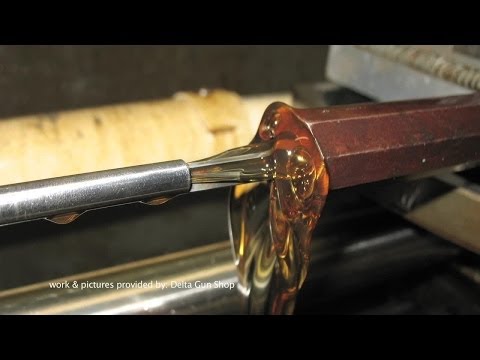
This video demonstrates the Nitre Blueing process for firearm parts, a technique favored for its aesthetic appeal on small components. It details the preparation, including polishing to 800 grit, and the controlled heating of specialized bluing salts to 650°F. The process involves dipping parts, carding off salts, and repeating until a desired straw to electric blue color is achieved, followed by quenching and oiling for rust prevention.

Quick Summary

Nitre Blueing requires heating specialized salts to 650°F. Parts must be polished to 800 grit, dipped in the molten salts, carded, and re-dipped until the desired electric blue color is achieved. Finally, quench in water and oil to prevent rust.

Chapters

  1. 00:00Introduction to Nitre Blueing
  2. 00:16Preparation and Melting Salts
  3. 00:30The Blueing Process: Dipping & Carding
  4. 00:53Quenching and Finishing
  5. 01:09Post-Treatment Care and Rust Prevention

Frequently Asked Questions

What temperature is needed for Nitre Blueing?

Nitre Blueing salts need to be heated to 650 degrees Fahrenheit. This temperature is crucial for melting the salts into a liquid state and achieving the desired finish on firearm parts.

How do you prepare firearm parts for Nitre Blueing?

Before Nitre Blueing, firearm parts must be polished to at least an 800-grit finish. This ensures a smooth surface for the bluing salts to adhere to, resulting in an even and attractive final color.

What is the process for achieving the blue color in Nitre Blueing?

Parts are dipped into the molten 650°F Nitre Blueing salts, removed to card off crystallized salts, and then returned to the pot. This process is repeated until the desired straw to electric blue color is achieved.

Why is quenching important after Nitre Blueing?

Quenching the heated parts in water after Nitre Blueing helps to cool the metal rapidly. This action locks in the bright electric blue finish, preventing it from changing further and ensuring its vibrancy.

More Gunsmithing & DIY Videos You Might Like

More from MidwayUSA

View all →