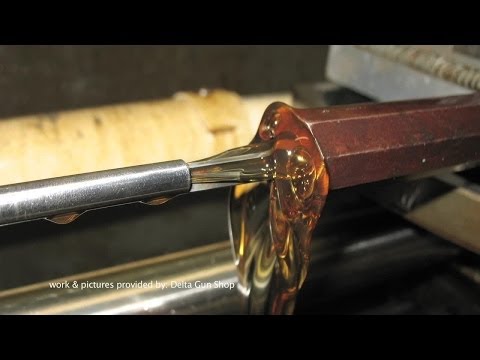
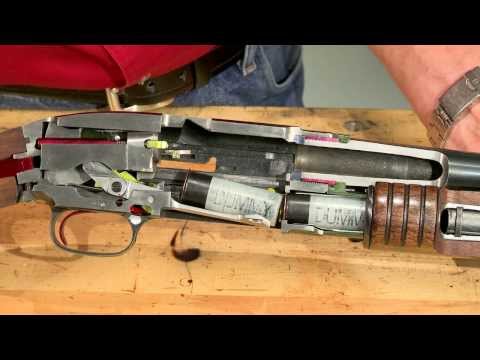
How to Rust Blue a Rifle Presented by Larry Potterfield | MidwayUSA Gunsmithing

Published on September 27, 2013
Duration: 4:21

This guide details the slow rust bluing technique for firearm finishing, presented by expert Larry Potterfield. It covers preparation, application of bluing solution, controlled rusting in a damp box, conversion via boiling, rust removal with a carding wheel, and final oiling. The process emphasizes traditional gunsmithing methods for a durable satin finish, as demonstrated on high-end firearms.

Quick Summary

Slow rust bluing is a traditional firearm finishing technique that creates a durable satin black oxide finish. The process involves repeated cycles of applying bluing solution, controlled rusting in a damp box, boiling to convert red rust to black velvet, and carding to remove loose rust, followed by an oil cure.

Chapters

  1. 00:00Introduction to Rust Bluing
  2. 00:30Preparation and Tools
  3. 01:00Degreasing and Solution Application
  4. 01:46The Damp Box and Rusting Process
  5. 02:19Boiling and Conversion
  6. 02:50Carding the Parts
  7. 03:41Final Finishing and Curing

Frequently Asked Questions

What is the slow rust bluing process for firearms?

Slow rust bluing is a traditional firearm finishing method involving repeated cycles of applying a bluing solution, controlled rusting in a damp environment, boiling to convert red rust to black oxide, and carding to remove loose rust, culminating in a durable satin finish.

What tools are essential for performing slow rust bluing?

Essential tools include acetone for degreasing, wooden barrel plugs, a bluing solution (like Pilkington's), cotton pads, a damp box with controlled humidity and temperature, a wire wheel or steel wool for carding, and boiled linseed oil for the final finish.

How long does the slow rust bluing process typically take?

The slow rust bluing process is labor-intensive and involves multiple applications. Each rust cycle takes about an hour, and the entire process, including preparation and curing, can span several days to achieve a deep, even finish over multiple applications.

What is the purpose of boiling the parts during rust bluing?

Boiling the rusted parts in distilled water converts the undesirable red rust (iron oxide) into a stable, desirable black oxide finish, often referred to as 'black velvet,' which forms the basis of the final blued appearance.

More Gunsmithing & DIY Videos You Might Like

More from MidwayUSA

View all →