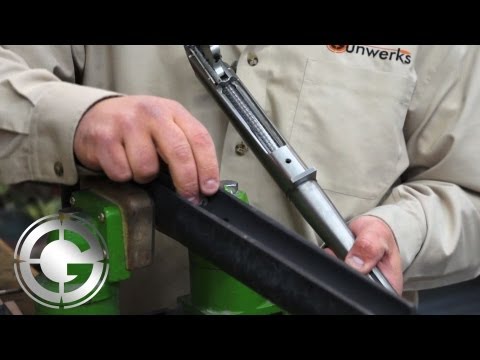
Installing a Rifle Muzzle Brake

Published on April 12, 2011
Duration: 2:06

This guide details the professional installation of a Gunwerks muzzle brake, emphasizing precision machining techniques. It covers critical steps like bore centering, threading to Class 2A specifications, precise muzzle crowning, and achieving optimal bullet clearance. The process concludes with finishing touches like ceramic coating for a seamless, integrated look, highlighting the high level of expertise involved.


Quick Summary

Professional installation of a Gunwerks muzzle brake involves precise CNC machining, bore centering with specialized tools, and threading to a Class 2A fit. The muzzle requires a precise crown, and the brake is bored to match the barrel contour, ensuring 0.010 inches of bullet clearance per side for optimal efficiency and safety.

Chapters

  1. 00:00CNC Machining for Muzzle Brakes
  2. 00:20Centering the Bore
  3. 00:31Barrel Threading
  4. 00:48Muzzle Crowning and Brake Fitting
  5. 01:22Internal Boring and Clearance
  6. 01:43Final Finishing

Frequently Asked Questions

What is the importance of precise work-holding fixtures when installing a muzzle brake?

Precise work-holding fixtures, especially when using CNC machines, are crucial for achieving tight tolerances during muzzle brake installation. This precision directly enhances rifle accuracy and improves the overall efficiency of the manufacturing process.

How is the barrel bore centered for muzzle brake installation?

The barrel bore is centered using specialized tooling and measuring devices. This process ensures the barrel is precisely fixtured, which is a critical first step before facing the barrel and cutting threads for the muzzle brake.

What thread fit specification is used for the barrel tenon?

The barrel tenon threads are cut to a Class 2A fit. This standard ensures a medium tolerance for external threads, providing a secure and accurate mounting surface for the muzzle brake.

What is the recommended bullet clearance for a muzzle brake?

The internal diameter of the muzzle brake should be bored to provide 0.010 inches of clearance per side for the bullet. This specific clearance maximizes the brake's efficiency and ensures safe passage of the projectile.

More Gunsmithing & DIY Videos You Might Like

More from Gunwerks

View all →