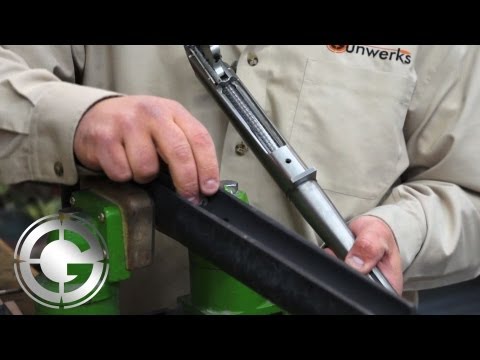
Installing a Rifle Muzzle Brake

Published on April 12, 2011
Duration: 2:06

This video details the professional installation of a rifle muzzle brake using CNC machining for precise tolerances. Key steps include accurate barrel centering, threading with a Class 2A fit, and precise muzzle crowning. The brake is bored to ensure 0.010 inches of clearance per side for optimal bullet passage, followed by final polishing and a ceramic coating for a seamless, integrated look.

Quick Summary

Professional rifle muzzle brake installation requires precise CNC machining, starting with accurate barrel bore centering. Threads are cut to a Class 2A fit, and the brake is bored for 0.010 inches of clearance per side. Final steps include polishing and ceramic coating for a seamless finish.

Chapters

  1. 00:00CNC Machining for Muzzle Brakes
  2. 00:20Centering the Barrel Bore
  3. 00:31Barrel Threading Process
  4. 00:48Muzzle Crowning and Brake Fitting
  5. 01:22Internal Boring and Bullet Clearance
  6. 01:43Final Finishing and Coating

Frequently Asked Questions

What is the first critical step in installing a rifle muzzle brake?

The first critical step is precisely centering the barrel bore using specialized tooling and measuring devices. This ensures the barrel is perfectly aligned for subsequent machining operations like threading and crowning.

What thread fit is recommended for muzzle brake installation?

Threads are typically cut to a Class 2A fit. This designation ensures a proper, reliable engagement between the barrel tenon and the muzzle brake threads, balancing ease of assembly with secure fitting.

Why is specific bullet clearance important for a muzzle brake?

Adequate bullet clearance, typically 0.010 inches per side, is vital. It maximizes the muzzle brake's efficiency by allowing gas to escape effectively around the projectile without causing baffle strikes.

What finishing steps are involved after machining a muzzle brake?

Final finishing includes polishing to remove machining marks, chamfering the ports for smooth gas flow, and often applying a ceramic coating. This provides durability and an aesthetically integrated appearance.

Related News

All News →

More Gunsmithing & DIY Videos You Might Like

More from Gunwerks

View all →