
Videos tagged with Coriolis Effect


This video features Bryan Litz, a recognized expert in ballistics, explaining the critical concept of the transonic range in long-range shooting. He details how bullet performance becomes less predictable as it approaches and falls below the speed of sound (1340 ft/s), emphasizing the increased complexity of factors like drag and spin drift. Litz recommends his own extensive book series for those seeking to master these advanced ballistic principles for improved field accuracy.

This video provides an expert-level explanation of the Coriolis effect in long-range shooting, presented by ballistician Bryan Litz. It details how the Earth's rotation influences bullet trajectory, becoming significant with increased flight time and distance. The content emphasizes when this second-order effect is relevant for precision shots and when it can be disregarded due to other dominant environmental factors.


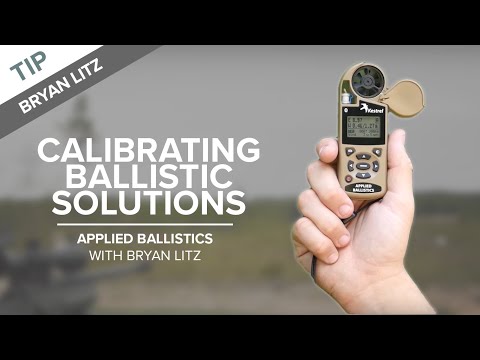
This guide details the process of calibrating a ballistic solution, as explained by Bryan Litz, a subject matter expert in ballistics. It covers essential techniques like muzzle velocity truing and Drag Scale Factor (DSF) truing for accurate long-range shooting. Proper calibration ensures the solver adapts to real-world conditions, enabling first-shot hits by accounting for factors like range, wind, and atmospheric pressure.


You've reached the end! 12 videos loaded.