The speaker re-evaluates the Pistol Caliber Carbine (PCC) as a primary rifle choice, concluding that for scenarios requiring engagement beyond close quarters, or where barrier penetration and terminal ballistics are critical, a rifle caliber platform is superior. He emphasizes the need for a rifle's ballistic performance and ability to defeat barriers, especially when considering family safety in uncertain environments.
This comprehensive guide, presented by an expert from Precision Rifle Network, details the fundamentals of long-range precision shooting for both hunting and competition. It covers external ballistics, wind compensation, the importance of ballistic solvers and data truing, and key equipment features like heavy barrels and FFP scopes. The instruction emphasizes ethical hunting responsibilities and the continuous improvement required through practice and data analysis.
This video from Warrior Poet Society explains how temperature significantly impacts long-range rifle accuracy. Instructor John Lovell details two primary mechanisms: changes in air density, which affect bullet flight, and alterations to the powder's burn rate, influencing projectile velocity and energy. Understanding these variables is crucial for consistent performance at extended distances.
This video critiques the internet's tendency to promote numerous specialized rifle builds (CQB, GPR, SPR, Field Rifle) for various SHTF scenarios. The instructor emphasizes that most individuals would be better served by mastering one reliable rifle platform and focusing on practical training, understanding ballistics, and considering their actual use case and physical capabilities. The core message is to avoid falling victim to consumerism and instead prioritize proficiency with a single, well-understood firearm.
This video delves into the complexities of ballistics, particularly terminal ballistics, explaining the numerous variables that influence projectile behavior upon impact. The speaker, a former sniper and Green Beret, emphasizes that while internal and external ballistics can be calculated, terminal ballistics are inherently unpredictable due to factors like impact angle, tissue density, projectile spin rate, and engineering. The discussion highlights how modern ammunition engineering, including tumbling and frangible rounds, significantly impacts terminal performance, and stresses the importance of understanding these variables for accurate analysis.
This video provides an in-depth look at the M24 Sniper Weapon System, detailing its components, operational principles, and marksmanship fundamentals. It covers the importance of proper aiming, follow-through, and recoil management for achieving accuracy at extended ranges. The instruction emphasizes understanding external ballistics and maintaining a stable shooting platform.
This guide details AR-15 zeroing techniques, emphasizing that 'mission dictates gear.' Instruction from experienced firearms professionals Kaya and Jason covers POA/POI mechanics, and analysis of common zeros (25, 36, 50, 100-yard) with considerations for barrel length and ammunition. The 50-yard zero is highlighted as a versatile and 'foolproof' option for most users.
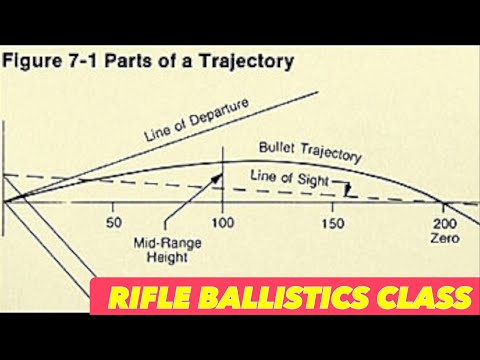
This video provides a foundational understanding of ballistics for rifle marksmanship, breaking it down into three key areas: internal, external, and terminal. It explains how factors like barrel rifling, environmental conditions, and bullet velocity significantly impact projectile trajectory and effectiveness. The content is geared towards shooters seeking to improve their accuracy by understanding the science behind bullet flight.
This YouTube Shorts video focuses on a ballistic test of a 6.5mm projectile at a distance of 1000 yards. The short format suggests a quick demonstration of the round's performance and terminal ballistics at long range, likely emphasizing its capabilities for precision shooting or hunting at extended distances.
Chuck Pressburg discusses the 'No Fail Rifle' class, emphasizing practical application of external ballistics and the impact of height over bore on zeroing. The course focuses on real-world data collection, teaching shooters how to account for bullet drop and make accurate holds at various distances. It also delves into the critical, often overlooked, issue of zero shift caused by different shooting platforms like bipods, barricades, and magazine rests, highlighting the importance of understanding how mechanical stress affects accuracy.
This video explores the feasibility of hitting a target at one mile using full-auto fire with an M16 and an AK-47. The experiment, conducted by Edwin Sarkissian with a spotter, highlights the extreme challenges of long-range accuracy, especially with automatic fire. It demonstrates the critical need for precise adjustments for bullet drop and the limitations of full-auto for extreme distances.
Gun Laws by State
Read firearms regulations for all 50 states + D.C.
Find Gun Dealers
Search licensed FFL dealers near you.