Tough Shot at 1 Mile

Published on May 16, 2012
Duration: 5:48

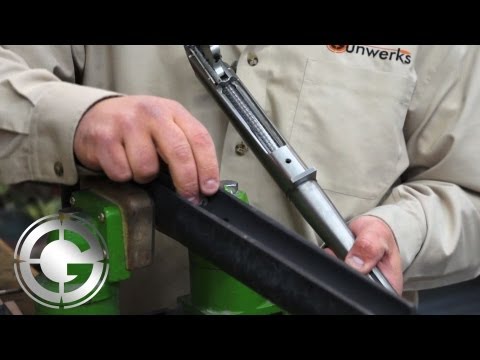
This video demonstrates a challenging 1-mile shot using a Gunwerks LR1000 rifle in 6.5x284. It highlights the critical importance of accounting for external ballistics, including the Coriolis effect and wind, for extreme long-range accuracy. The demonstration showcases the use of advanced ballistic software and precise scope adjustments to achieve a successful hit on a 20-inch steel target.

Quick Summary

Hitting a 1-mile target requires advanced tools like the Gunwerks LR1000 rifle and G7 ballistic software to calculate for Coriolis effect and wind. Precise adjustments, such as 57 MOA elevation and 1.5 MOA wind hold, are crucial for accuracy.

Chapters

  1. 00:00Introduction: The 1-Mile Challenge
  2. 00:44Understanding Coriolis Effect & Ballistics
  3. 01:09Equipment: Gunwerks LR1000 & Ballistic Software
  4. 02:31Scope Adjustments & Wind Reading
  5. 03:29Executing the 1-Mile Shot
  6. 05:22Post-Shot Analysis & Key Factors

Frequently Asked Questions

What is required to make a 1-mile shot?

Making a 1-mile shot requires precise equipment like a high-quality rifle (e.g., Gunwerks LR1000 in 6.5x284), advanced ballistic software, accurate environmental data, and expert marksmanship to account for factors like Coriolis effect and wind drift.

How does the Coriolis effect impact long-range bullets?

The Coriolis effect, due to Earth's rotation, causes a bullet to drift vertically. At extreme distances like one mile, this displacement can be significant, requiring precise calculations and adjustments to compensate for the target 'falling away'.

What tools are used for extreme long-range shooting?

For extreme long-range shooting, essential tools include a precision rifle, a high-powered scope, a wind meter (like Skywatch Xplorer 4), and advanced ballistic calculators (like G7 LRBC software on an HP iPAQ) that can handle complex variables.

How much adjustment is needed for a 1-mile shot?

For a 1-mile shot, significant adjustments are needed. In this case, 57 MOA of elevation was required, plus an additional 1.5 MOA wind hold correction after the first shot indicated wind drift.

Related News

All News →

More Training & Techniques Videos You Might Like

More from Gunwerks

View all →