Tough Shot at 1 Mile

Published on May 16, 2012
Duration: 5:48

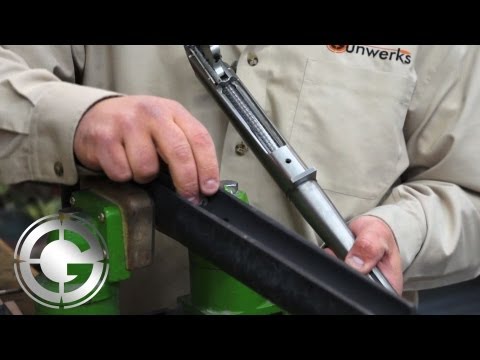
This guide details the advanced technique for executing a 1-mile shot, as demonstrated by Mike Davidson, Gunwerks Production Manager. It emphasizes the critical role of precise ballistic calculations, accounting for environmental factors and complex physics like the Coriolis effect, alongside accurate wind reading and scope adjustment. The successful execution requires specialized equipment and a deep understanding of external ballistics.

Quick Summary

Executing a 1-mile shot requires advanced ballistics calculations, including compensation for the Coriolis effect and precise wind calls. Equipment like the Gunwerks LR1000 rifle, G7 LRBC software, and a Skywatch wind meter are crucial for achieving accuracy at extreme distances.

Chapters

  1. 00:00Introduction to the 1-Mile Challenge
  2. 00:44Coriolis Effect and Ballistics
  3. 01:09Equipment and Software
  4. 02:31Scope Adjustments and Wind Reading
  5. 03:29Executing the Shot
  6. 05:22Post-Shot Analysis

Frequently Asked Questions

What is the primary challenge in making a 1-mile shot?

The primary challenge is accounting for extreme bullet drop and environmental factors like wind and the Coriolis effect, which significantly alter trajectory over such vast distances. Precise calculations and equipment are essential.

How does the Coriolis effect impact a 1-mile shot?

The Coriolis effect, caused by Earth's rotation, induces a vertical displacement on the bullet's trajectory. At 1 mile, this effect can be substantial, requiring precise compensation in the ballistic solution.

What equipment is necessary for a 1-mile shot?

Essential equipment includes a high-precision rifle like the Gunwerks LR1000, advanced ballistic software (e.g., G7 LRBC), a reliable wind meter, and a scope with precise, high-range adjustment capabilities.

Why is a dedicated ballistic calculator important for extreme long-range shooting?

Dedicated ballistic calculators can factor in complex variables like the Coriolis effect, spin drift, and atmospheric conditions that standard rangefinders might not account for, providing a more accurate firing solution for distances beyond 1400 yards.

Related News

All News →

More Training & Techniques Videos You Might Like

More from Gunwerks

View all →