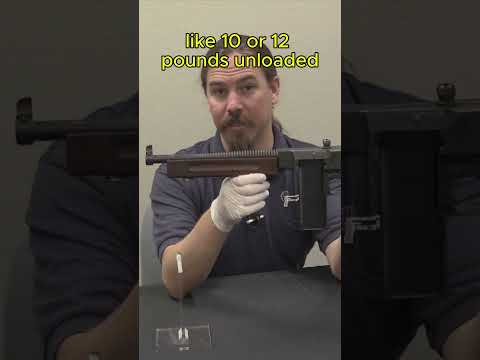
Mauser 1912/14 Development in .45ACP

Published on May 31, 2021
Duration: 8:44

This video delves into the experimental development of the Mauser 1912/14 pistol in .45 ACP, showcasing three distinct prototypes. Expert Ian McCollum meticulously details the mechanical variations, including pivoting wedge and flapper delay systems, aimed at adapting 9mm designs for the more powerful .45 caliber. The analysis highlights the tool-room nature of these prototypes, which never saw commercial production.

Quick Summary

The Mauser 1912/14 .45 ACP prototypes were experimental firearms developed to adapt 9mm designs for the US and South American markets. They showcased evolving delayed blowback mechanisms, including pivoting wedges and flapper systems, with one prototype featuring a unique sheet steel recoil buffer. These were tool-room pieces, never commercially produced or officially proofed.

Chapters

  1. 00:00Introduction to .45 ACP Mauser Prototypes
  2. 02:20First Iteration: Pivoting Wedge Delay
  3. 03:41Second Iteration: Simplified Lever Delay
  4. 04:46Third Iteration: Flapper Delay System
  5. 05:56Feature Comparison and Historical Context

Frequently Asked Questions

What were the key mechanical differences between the Mauser 1912/14 .45 ACP prototypes?

The prototypes featured distinct delayed blowback systems: the first used a pivoting wedge, the second a simplified lever, and the third the flapper delay mechanism found in standard 9mm models. Variations also included recoil buffers and slide serrations.

Why did Mauser develop the 1912/14 in .45 ACP?

Mauser attempted to adapt their 9mm designs for the more powerful .45 caliber market, primarily targeting potential sales in the United States and South America where this caliber was more popular.

Were the Mauser 1912/14 .45 ACP prototypes ever commercially produced?

No, these were experimental tool-room prototypes. They never reached commercial production or official proofing, representing unique developmental pieces rather than standard issue firearms.

What is the significance of the recoil buffer in the first Mauser 1912/14 prototype?

The stacked sheet steel recoil buffer was a unique feature designed to cushion the slide's impact when cycling with the more powerful .45 ACP cartridge, a necessity not present in the 9mm variants.

More Gunsmithing & DIY Videos You Might Like

More from Forgotten Weapons

View all →