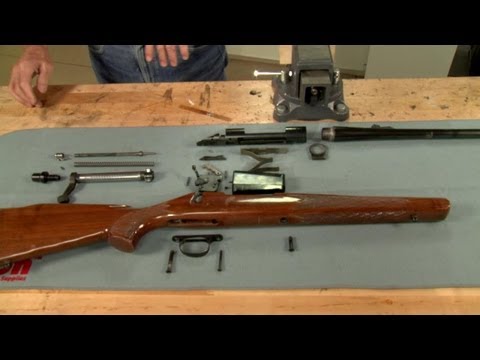
Mauser Gew1898 Conservation and Checkout: Anvil 0134

Published on January 19, 2024
Duration: 60:00

This video details the conservation and checkout of a 1916 Mauser Gewehr 1898 barn find. Mark Novak demonstrates meticulous disassembly, cleaning with Kroil and Acetone/ATF, and conservation techniques like boiling metal parts to convert rust. Key mechanical features, including the Lange Vizier sight and third locking lug, are explained. The process reveals a broken firing pin and significant muzzle pitting, highlighting the importance of thorough safety checks before firing.

Quick Summary

The Mauser Gewehr 1898 features a third locking lug as a crucial backup safety mechanism. Additionally, conservation techniques like boiling metal parts in water can convert red rust to black oxide, preserving the firearm's original finish and integrity.

Chapters

  1. 00:00Introduction & Condition Assessment
  2. 00:57Key Mechanical Features: Lange Vizier & Third Lug
  3. 02:11Initial Lubrication & Disassembly
  4. 10:42Action Removal & Inspection
  5. 16:45Component Removal & Bolt Disassembly
  6. 23:35Stock & Metal Conservation Process
  7. 30:25Safety Systems & Checkout Procedures
  8. 34:46Muzzle Inspection & Final Assessment

Frequently Asked Questions

What are the key safety features of the Mauser Gewehr 1898?

The Mauser Gewehr 1898 features a three-position wing safety and a third locking lug. The third lug acts as a critical backup safety mechanism in case of primary lug failure, enhancing overall firearm safety.

How is rust converted to black oxide during firearm conservation?

A common conservation method involves boiling metal parts in water. This process converts red rust (ferric oxide) into black oxide (ferrous-ferric oxide), which is more stable and helps preserve the underlying metal and original finish.

What is 'oxide jacking' in relation to antique firearms?

'Oxide jacking' refers to the expansion of rust between metal parts and a wooden stock. This expansion can tighten the fit of metal components, sometimes making disassembly difficult and potentially indicating underlying corrosion.

Why is muzzle pitting a critical issue for a rifle's safety?

Significant rust and pitting inside the bore near the muzzle crown can act as a bore obstruction. This obstruction can cause dangerous pressure spikes when fired, potentially leading to catastrophic failure of the firearm or injury.

Related News

All News →

More Gunsmithing & DIY Videos You Might Like

More from Mark Novak

View all →