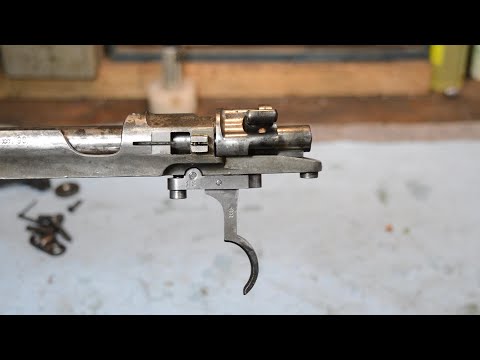
Mark Novak discusses the significant challenges faced by firearm content creators due to platform censorship, even for basic maintenance tasks. He announces a strategic shift to Patreon to host his content, aiming to bypass restrictions and preserve his existing library. Novak warns viewers about the potential for content removal and stresses the importance of immediate consumption of new material, concluding with a crucial safety reminder about wearing safety glasses.
This guide details the disassembly and cleaning of an 1860 Henry Rifle, as demonstrated by Mark Novak. It covers essential steps like removing the side plate, cleaning internal components, and inspecting for damage, emphasizing careful handling of historical firearms. Novak's expert instruction highlights common issues like verdigris and firing pin damage from dry firing, advising against improper maintenance that can harm the firearm's integrity.
Mark Novak, recognized for his high authority and expertise in the firearms industry, provides an update on his nomination for the Gundies 2025 awards. He also addresses the status of his 'Anvil 152' video, which is now back online after a temporary removal, and mentions its availability on his Patreon for detailed technical content. Novak shares personal milestones, including his birthday and the historical significance of December 5th.
This video details the complex process of converting a Winchester 1897 shotgun into a trench gun configuration. It covers critical steps such as legally shortening the barrel, modifying the magazine tube, fabricating and fitting a bayonet lug and heat shield, and addressing significant engineering challenges that arise from using reproduction parts. The presenter emphasizes the need for specialized tools and advanced machining skills to achieve a functional and safe result.
This guide, presented by professional gunsmith Mark Novak, details a method for cleaning and removing light surface rust from a Browning Double Auto shotgun using WD-40 and 0000 steel wool. It covers the cleaning process for both the barrel and aluminum receiver, followed by a demonstration of the unique side-loading manual of arms and test firing. Novak emphasizes that this method is suitable only for light rust and not for pitted surfaces.
This guide details the process of repairing a split firearm stock using epoxy. It emphasizes preparing the epoxy, using a custom-fit wooden insert for clamping pressure, and cleaning up excess material with vinegar. The instructor, Mark Novak, demonstrates this technique on a Model 37, highlighting the importance of proper clamping to avoid starving the joint and ensuring a strong, hidden repair.
This video demonstrates various checkering tools and techniques used by Mark Novak for firearm stocks. It covers the setup of a powered checkering tool, different cutter angles and their applications, specialized tools like chasing chisels and bordering tools, and essential accessories such as china markers and movable lighting for detailed work on gunstocks.
This comprehensive guide details the conservation and checkout of a 1916 Mauser Gewehr 1898 rifle, presented by expert gunsmith Mark Novak. It covers meticulous disassembly, rust conversion techniques, stock care, bolt maintenance, and crucial safety checks, including an impact test. The process highlights the importance of preserving historical firearms while ensuring mechanical integrity and safety, noting potential issues like bore obstructions that require further gunsmithing.
This guide details the meticulous gunsmithing process for repairing a Luger Carbine grip, including immobilization, precision cutting, inletting with blacking, and final checkering. It also provides an expert explanation of the Luger's complex toggle-action mechanism, drawing comparisons to other historical firearms. The instruction comes from Master Gunsmith Mark Novak, known for his deep historical and mechanical knowledge.
This video details the extensive gunsmithing required to restore a neglected Winchester Model 42 shotgun. Mark Novak demonstrates a deep clean and conservation process, highlighting the differences between the Model 42 and Model 12. Key steps include disassembly, rust removal from the chamber and internals, and careful reassembly using reference photos, concluding with a function check of its unique speed-rack system.
This video details the conservation of a barn-found LC Smith 20 Gauge shotgun. Mark Novak demonstrates critical steps including barrel solder testing, proper disassembly with fitted tools, and analysis of the stock's inherent weaknesses. The conservation process involves boiling metal parts to convert rust to black oxide and treating the wood with oil, followed by meticulous reassembly and a successful test fire.
This video showcases a unique, custom-built Martini Henry rifle by gunsmith Mark Novak. The rifle features a barrel sleeve created from a piece of water pipe to address pitting and a stock crafted from Turkish Walnut. It retains its original 577 450 Martini Henry caliber and can be configured as a pistol.
Gun Laws by State
Read firearms regulations for all 50 states + D.C.
Find Gun Dealers
Search licensed FFL dealers near you.