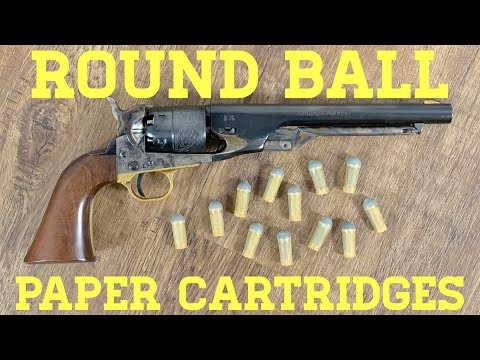
Paper Cartridge Kits

Published on July 14, 2020
Duration: 8:43

This guide, presented by Dustin from Guns of the West, details the process of creating paper cartridges for cap and ball revolvers. It covers material preparation, envelope construction using cigarette papers and formers, precise powder charging (17 grains for .36, 25 grains for .44), bullet seating with glue, and final lubrication with a custom beeswax and lamb tallow mixture. The instruction emphasizes practical techniques for DIY ammunition crafting.


Quick Summary

Expert Dustin from Guns of the West demonstrates how to create DIY paper cartridges for cap and ball revolvers. The process involves using cigarette papers, caliber-specific formers for precise powder charging (17 grains for .36, 25 grains for .44), seating bullets with glue, and applying a custom beeswax and lamb tallow lubricant.

Chapters

  1. 00:00Introduction to Paper Cartridge Kit
  2. 00:17Kit Contents Overview
  3. 01:38Envelope Construction Technique
  4. 04:46Powder Charging Demonstration
  5. 05:34Bullet Seating and Sealing
  6. 06:16Applying Custom Lubricant
  7. 07:00Caliber and Projectile Options

Frequently Asked Questions

What materials are needed to make paper cartridges for cap and ball revolvers?

You'll need RAW Classic cigarette papers, pre-cut paper circles, a bullet mold (like Erasgone), a custom beeswax/lamb tallow lube, a glue stick, a powder funnel, and a caliber-specific cartridge former.

How much black powder should be used for .36 and .44 caliber paper cartridges?

For .36 caliber, use approximately 17 grains of black powder. For .44 caliber, use approximately 25 grains. Always use the former's built-in measure for accuracy.

What is the recommended lubricant for paper cartridges?

A custom 50/50 mixture of beeswax and lamb tallow is recommended. It's applied to the exterior of the finished cartridge using a dispenser tube for effective sealing and lubrication.

What is the purpose of the cartridge former in this process?

The cartridge former, often 3D-printed, serves multiple purposes: it aids in rolling the paper envelope, acts as a precise powder measure (17 grains for .36, 25 grains for .44), and helps in seating the bullet.

More Gunsmithing & DIY Videos You Might Like

More from Guns of the West

View all →