This guide details the process of handloading .45 Colt cartridges with FFFg black powder for a Single Action Army style revolver. It covers filling the casing, seating a lead bullet, loading the firearm, and live fire demonstration, highlighting the characteristic smoke and residue associated with black powder. The instruction comes from an experienced reloader and shooter, Misha.
This video tests the viability of 21-year-old Pyrodex Select powder in an 1860 Army revolver. The experiment demonstrates that while the powder can still ignite after two decades, it exhibits significant hangfires, indicating a degradation in performance. The instructor advises against storing and using such old powder, emphasizing that its efficacy diminishes over time.
This video examines the Colt Thuer Derringer, 3rd Generation, a popular Old West firearm. It details why such small guns were carried despite city ordinances prohibiting weapons, focusing on their concealability and effectiveness with properly loaded 41 Short ammunition. The presenter demonstrates firing the weapon and discusses its historical context and lethality.
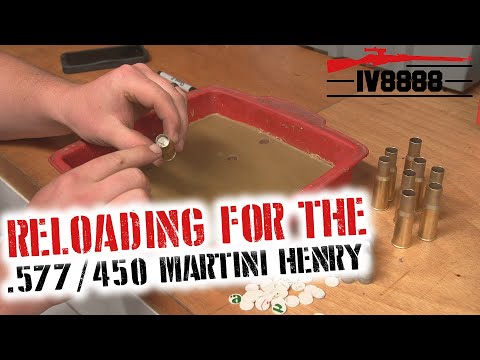
This guide details the complex process of handloading ammunition for the .577/450 Martini-Henry rifle, a task requiring specialized tools and meticulous attention to detail. Expert Eric from Iraqveteran8888 emphasizes safety, particularly when working with black powder, and outlines the steps for preparing brass from 24-gauge shotshell hulls, casting projectiles, and utilizing specific reloading dies. The process is described as laborious but rewarding for enthusiasts of historical firearms.
This guide outlines strategies for a 2-gun match featuring the Enfield Jungle Carbine and Martini-Henry. It covers handling both bolt-action and lever-action rifles, managing ammunition types (including black powder handloads), and navigating long and short-range stages. Instruction emphasizes adapting to rifle characteristics, dealing with visibility issues from smoke, and managing physical exertion during competitive shooting.
The Area 419 Master Funnel Kit is a premium reloading accessory constructed from anodized 6061 T6 billet aluminum. Its key feature is an internally fluted funnel design that promotes smoother powder flow, preventing grain bunching in the case neck. The kit includes various threaded attachments for a precise fit over different case necks, ensuring no powder leakage and compatibility with black powder.
This Q&A session from InRangeTV covers a wide array of firearms-related topics, from training methodologies and optic choices to historical firearms and modern self-defense considerations. The host discusses the effectiveness of .22LR conversion kits versus dedicated .22LR rifles for marksmanship training, offers insights into VOMZ optics, and weighs the merits of the 1911 against the 1917 revolver for self-defense. Practical advice is given on reloading black powder cartridges in the field, the historical context of the 'Mares Leg,' and the practicality of various handgun and rifle platforms for everyday carry and home defense. The discussion also touches on the challenges of historical accuracy in firearms representation, the evolution of firearm design, and the importance of community in survival scenarios.
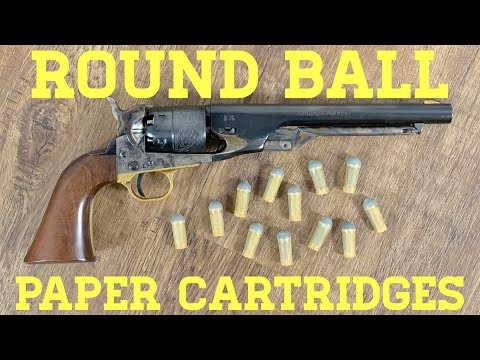
This guide details the creation and loading of round-ball paper cartridges for the 1860 Army Revolver, utilizing the Guns of the West kit. Expert instruction covers assembling the cartridges, measuring black powder charges, seating and lubricating round balls, and finally loading the revolver with percussion caps for live fire. The demonstration emphasizes reliable ignition and accuracy at an outdoor range.
This guide details the expert process of hand-loading ammunition for a vintage Alexander Henry Double Rifle in .450 3 1/4" Black Powder Express caliber. Larry Potterfield, demonstrating master gunsmithing and historical appreciation, covers component selection, bullet casting, lubrication, case preparation, powder charging, and crimping. The instruction emphasizes precision for optimal performance with black powder firearms.
This guide, presented by Dustin from Guns of the West, details the process of creating paper cartridges for cap and ball revolvers. It covers material preparation, envelope construction using cigarette papers and formers, precise powder charging (17 grains for .36, 25 grains for .44), bullet seating with glue, and final lubrication with a custom beeswax and lamb tallow mixture. The instruction emphasizes practical techniques for DIY ammunition crafting.
This guide details the process of loading and firing Pyrodex Pistol Pellets in a .44/.45 caliber cap and ball revolver, as demonstrated by Dustin Winegar. It covers proper pellet handling, seating, priming, and considerations for chronograph testing, emphasizing accuracy and safety. The instruction comes from an expert with high technical proficiency in black powder firearms.
Dustin Weeger tests Triple Seven powder loads in an 1851 Colt Navy revolver at 45 feet. He evaluates 15, 18, and 21-grain loads for accuracy and velocity. The 18-grain load demonstrated the best balance of accuracy and consistency, with an average velocity of 839 ft/s and a group size of approximately 2 inches. The 15-grain load was also consistent but less accurate, while the 21-grain load showed poor consistency and accuracy, suggesting it's an overcharge.
Gun Laws by State
Read firearms regulations for all 50 states + D.C.
Find Gun Dealers
Search licensed FFL dealers near you.