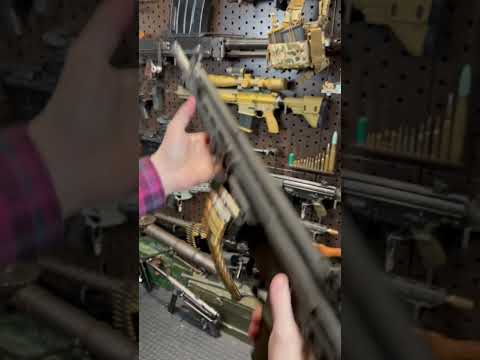
Rebirth and Death of the PTR 51P PDW

Published on August 22, 2020
Duration: 7:46

This guide details the disassembly and failure analysis of the PTR 51P PDW, a civilian variant of the Fleming Firearms 51K. It covers identifying common malfunctions like double feeds and broken hammers, performing repairs with aftermarket parts, and assessing internal damage caused by severe recoil. The analysis highlights potential factory assembly issues and the challenges of managing .308 caliber recoil in a short-barreled platform.


Quick Summary

The PTR 51P PDW, a short-barreled .308 variant, is prone to malfunctions including double feeds and broken hammers after low round counts. Its AR-style buffer tube adapter can fail during clearing drills. Recoil mitigation often requires aftermarket braces and muzzle brakes, as excessive force can deform internal components and receiver rails.

Chapters

  1. 00:00Introduction and History
  2. 00:22Reliability and Mechanical Failure
  3. 01:24Repairs and Testing
  4. 02:49Customization and Recoil Management
  5. 03:46Internal Damage Assessment
  6. 04:57Factory Assembly Issues
  7. 06:15Conclusion and Future Options

Frequently Asked Questions

What are the common failure points of the PTR 51P PDW?

The PTR 51P PDW has shown issues such as double feeds, broken hammers after low round counts (around 350), and failure of the AR-style buffer tube adapter when 'mortaring' the firearm to clear malfunctions. Internal components can also deform due to recoil.

How can recoil be managed on the PTR 51P PDW?

Managing the severe recoil of the .308 caliber PTR 51P PDW typically involves adding aftermarket pistol braces for stability and using effective muzzle brakes like the VG6 Gamma 762 or Epsilon to reduce muzzle rise and felt recoil.

What internal damage can occur in the PTR 51P PDW due to recoil?

Excessive recoil can cause deformation of the recoil buffer mounting plate and screws. Additionally, 'roller dents' may form on the internal receiver rails, indicating stress on the roller-delayed blowback system, even after low round counts.

What are the potential causes of malfunctions in the PTR 51P PDW?

Malfunctions and premature wear in the PTR 51P PDW can stem from inherent design challenges of a short-barreled .308 roller-delayed system, as well as potential factory assembly issues like over-torqued components.

Related News

All News →

More Gunsmithing & DIY Videos You Might Like

More from Hop

View all →