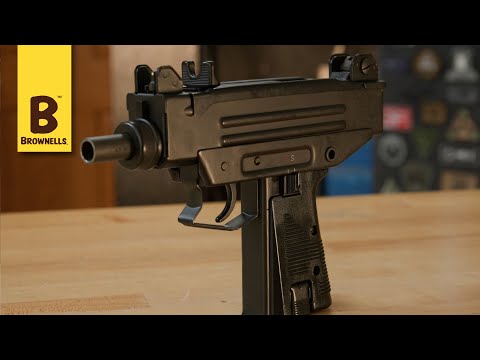
Registered Bolt vs Registered Receiver Uzis

Published on September 1, 2025
Duration: 10:19

This guide details the technical differences and legal considerations for converting semi-automatic Uzis into registered machine guns, focusing on the 'Registered Bolt' versus 'Registered Receiver' methods. Expert Ian McCollum explains that registered receiver conversions offer greater flexibility and compatibility with standard parts, aligning closer to the original military design. Proper understanding of NFA regulations and precise gunsmithing are crucial for legal and functional conversions.

Quick Summary

Registered Receiver Uzi conversions are generally preferred over Registered Bolt conversions because they allow the use of standard, unmodified full-auto bolts and barrels. This method supports easy caliber conversions (9mm, .45 ACP, .22 LR) and is closer to the original military design, offering greater flexibility for collectors and shooters.

Chapters

  1. 00:00Introduction to Uzi Conversions
  2. 01:43Semi-Auto Design Restrictions
  3. 03:15Registered Bolt vs. Registered Receiver
  4. 04:51Registered Bolt Pros and Cons
  5. 06:34Registered Receiver Pros and Cons
  6. 09:16Conclusion

Frequently Asked Questions

What are the main differences between a Registered Bolt and a Registered Receiver Uzi conversion?

A Registered Bolt conversion modifies the full-auto bolt to fit a semi-auto receiver's blocking bar, making the bolt the registered part. A Registered Receiver conversion removes the blocking bar from the receiver, allowing standard full-auto bolts and barrels to be used, with the receiver being the registered part.

Why are Registered Receiver Uzi conversions generally preferred?

Registered Receiver conversions are preferred because they allow the use of standard, unmodified full-auto bolts and barrels, making caliber conversions easier and keeping the firearm closer to its original military design. They also offer more flexibility for collectors and shooters.

What legal restrictions apply to Uzi conversions in the United States?

Factory machine gun imports were banned in 1968. Domestic conversions of semi-auto Uzis to full-auto were legal until 1986, after which new machine gun registrations were prohibited under the NFA.

What are the drawbacks of a Registered Bolt Uzi conversion?

Registered Bolt conversions are caliber-specific, require precise heat treatment after modification, and if the registered bolt breaks, it cannot be easily replaced without re-registering the component, posing a significant drawback.

Related News

All News →

More Gunsmithing & DIY Videos You Might Like

More from Forgotten Weapons

View all →