Repairing a Remington 1900 Double Barrel Shotgun | MidwayUSA Gunsmithing

Published on January 8, 2014
Duration: 16:42

This comprehensive guide details the advanced gunsmithing process for repairing a Remington Model 1900 KED Grade double barrel shotgun. Master Gunsmith Larry Potterfield demonstrates the fabrication of a new forend latch spring and the repair of 'off-face' barrels using shimming techniques. The video covers heat treatment, precision fitting, and testing, offering expert insights into restoring vintage firearms.

Quick Summary

Master Gunsmith Larry Potterfield demonstrates advanced repair techniques for a Remington Model 1900 KED Grade shotgun. The video covers fabricating replacement springs for ejectors and forend latches, including precise heat treatment, and professionally addressing 'off-face' barrels using shimming methods with Loctite 680.

Chapters

  1. 00:00Introduction to Remington 1900 KED Grade
  2. 00:51Identifying Shotgun Problems
  3. 01:16Forend Latch Fabrication
  4. 06:09Heat Treating the Latch Spring
  5. 07:16Understanding 'Off-Face' Barrels
  6. 09:19Shimming the Barrel Hook
  7. 14:46Ejector Spring Repair & Testing

Frequently Asked Questions

What are the common issues found in older, heavily used double-barrel shotguns like the Remington Model 1900?

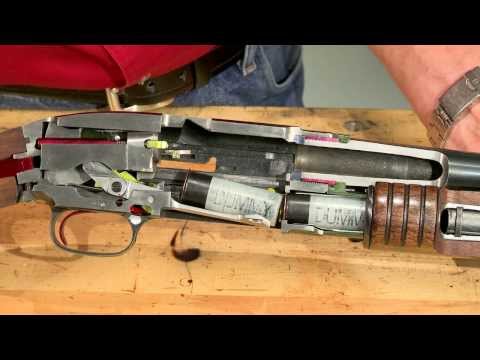
Common problems include broken forend latches, barrels being 'off-face' (not tightly seated against the receiver), and non-functional automatic ejectors due to broken springs, all stemming from extensive use over time.

How is a broken forend latch spring repaired on a Remington Model 1900?

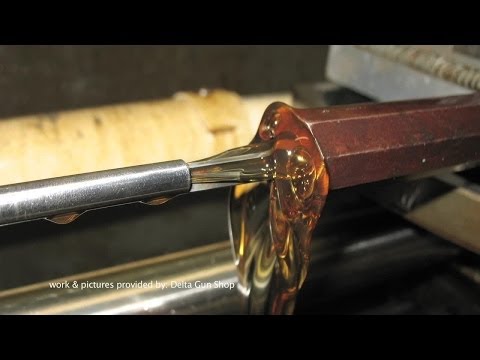
The repair involves fabricating a new spring from 3/16" spring steel flat stock. This includes shaping it using layout fluid, drilling, sawing, hot-forging, hardening in oil, and tempering in niter bluing salts to achieve the correct spring temper and blue finish.

What does 'off-face' mean for a double-barrel shotgun, and how is it fixed?

'Off-face' means there's a gap between the barrel breech and the receiver face. Professional fixes include installing an oversized hinge pin, welding the hook, or shimming the hook, as demonstrated using steel shim stock and Loctite 680.

What is the purpose of tempering steel in niter bluing salts during gunsmithing?

Tempering in niter bluing salts, heated to around 600°F, prevents hardened steel parts, like fabricated springs, from becoming too brittle. It achieves a specific blue color, indicating the correct temper for durability and flexibility.

Related News

All News →

More Gunsmithing & DIY Videos You Might Like

More from MidwayUSA

View all →