This video provides an in-depth look at the manufacturing process for bolts and bolt carriers at Centurion Arms. It highlights the use of advanced CNC machinery, including twin-spindle lathes and mills, integrated with collaborative robots for efficient, high-volume production. The emphasis is on a multi-stage process involving precise machining, rigorous quality control at multiple checkpoints, and specialized finishing techniques like heat treating and chrome plating to ensure mil-spec compliance and durability. The video also details critical steps like carrier key staking to prevent loosening, showcasing Centurion Arms' commitment to producing high-quality firearm components.
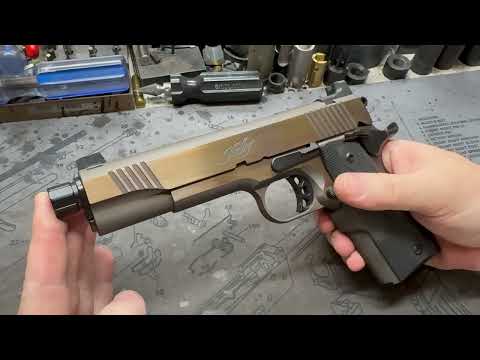
This video details a comprehensive custom build on a Kimber Eclipse Custom 2 1911 by MK3 Firearms. Key modifications include a full heat treatment of the stainless steel, installation of an Ed Brown Match Fit threaded barrel, Crimson Trace laser grips, a Fusion Firearms mainspring housing with lanyard loop, and a Wilson Combat safety. The build also features a custom single-stage trigger job for enhanced performance and reliability. The speaker's professional gunsmithing expertise is evident throughout the detailed explanation of each upgrade.
This video details the manufacturing process for the KelTec PR57 pistol at their new Rock Springs, Wyoming facility. It highlights the use of advanced machining techniques, including 3D modeling, CAM programming, and rotary fixtures, to produce components efficiently. The focus is on creating an affordable, reliable concealed carry firearm designed for self-defense, with specific attention paid to the unique rotary barrel and stripper clip fed system.
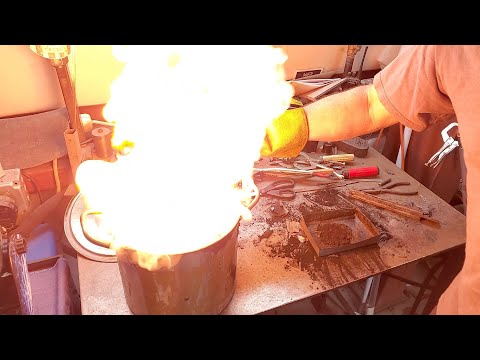
Mark Serbu demonstrates the flame hardening process for the ejection port edge of a BFGA receiver. This technique uses an oxy-acetylene torch to heat the steel to its austenitization temperature, followed by rapid quenching in water. The purpose is to harden the edge, preventing it from bending or dinging when large caliber casings are ejected, thereby increasing the receiver's durability.
This video details the comprehensive process of making a kitchen knife with Kyle Lamb. It covers design considerations, material selection (ABL steel, G10/Micarta), heat treatment and tempering, blade grinding, handle shaping, and final sharpening. The instruction emphasizes practical usability and craftsmanship, highlighting the detailed steps involved in transforming raw materials into a functional blade.
This video demonstrates the process of tempering heat-treated steel components, specifically BFG 50 bolts, to mitigate issues caused by excessive hardness. Mark Serbu explains how TIG welding heat-treatable alloy steel can harden the weld joint, making it difficult to machine and hard on tooling. By tempering these bolts at 1100 degrees Fahrenheit, the hardness is reduced, making machining easier and extending the life of carbide inserts.
This guide details the meticulous gunsmithing process for restoring a Japanese contract Peabody rifle, as demonstrated by expert Mark Novak. It covers identifying and repairing damage, fabricating replacement parts like the rear sight spring and screws, performing essential heat treatment, and reassembling the action. The process emphasizes conservation techniques over destructive restoration, culminating in successful range testing.
This Q&A session from C&Rsenal delves into the complexities of firearm restoration, particularly for percussion-era firearms. The hosts discuss the challenges of sourcing parts, the intricate process of crafting specialized springs, and the time-intensive nature of producing content on these historical weapons. They also touch upon future content plans, the difficulties of YouTube's platform, and the dedication required for in-depth historical firearms analysis.
This book review covers 'Textbook of Pistol Technology and Design' by Dr. Peter Dahllhammer, a mechanical engineer working for Walther. The book serves as an introductory to intermediate college-level textbook on firearm manufacturing from a commercial perspective, focusing on semi-automatic 9mm handguns. It details manufacturing technologies, part production, heat treatment, spring design, and handgun features like hammer vs. striker systems and safeties. The review highlights its comprehensive nature for those interested in the 'how' of gun production, rather than just the 'if it works'.
This video focuses on welding and heat treating, directly appealing to individuals involved in these specific metalworking processes. The creator explicitly states that the content will be uninteresting to those not engaged in these fields, highlighting a niche technical focus. While no firearms are explicitly mentioned, the processes described are commonly associated with firearm manufacturing, customization, or repair. Therefore, the tags lean towards the technical aspects that would be relevant to someone interested in these areas within the firearms community.
Ian McCollum, a recognized firearms historian, outlines two primary paths for aspiring gun designers. One involves pursuing generalized machining education for hands-on industry work, while the other suggests a stable, high-paying career to fund gun design as a passion project. He emphasizes that professional gun making often involves repetitive CNC operation rather than creative design.
This guide details the comprehensive in-house barrel manufacturing process at Wilson Combat, as explained by expert Ken Hackathorn. It covers everything from preparing raw blanks through drilling, reaming, buttoning for rifling, heat-treating, contouring, chambering, and final finishing operations like bead blasting. The process emphasizes precision at each stage to ensure high-quality barrel production, including the introduction of new product developments like the X9 barrel.
Gun Laws by State
Read firearms regulations for all 50 states + D.C.
Find Gun Dealers
Search licensed FFL dealers near you.