Channel: @markserbu
Mark Serbu provides an in-depth look at the Heckler & Koch P9S pistol in .45 ACP. He details its unique roller-delayed blowback system, a design shared with other HK firearms like the MP5, and contrasts it with traditional blowback mechanisms. The video covers the pistol's construction, including its stamped sheet metal components and fixed barrel, and demonstrates a basic field strip. Serbu also touches on the pistol's historical context and its aesthetic differences from modern firearms.
Mark Serbu discusses the challenges of moving his business and highlights concerns about new gun laws in Virginia. He advises Virginia residents awaiting BFG 50A rifles to consider purchasing receivers before new laws take effect, explaining that receivers can be legally owned and later completed. He draws a parallel to similar situations in California regarding .50 BMG bans.
This video details the process of repairing a chopped receiver section from a Star Z70 parts kit. Mark Serbu, a gun designer, demonstrates how to fabricate and weld in replacement metal to restore the structural integrity and form of the receiver. He emphasizes using an expanding mandrel for alignment and copper flashing to protect against welding spatter, while also discussing techniques to minimize heat distortion and achieve a functional repair using 'caveman tools' and optional CNC machining.
This review of a 9mm AR-15 by Mark Serbu, a recognized gun designer, delves into its functionality, historical context, and potential issues. Serbu highlights the use of Glock magazines with a magwell adapter, discusses trigger pack design, and analyzes bolt velocity and its impact on trigger slap, especially in converted full-auto variants. He also details the effectiveness of heavy buffers and stronger springs in managing rate of fire and recoil, comparing it to Uzi and MP5 submachine guns.
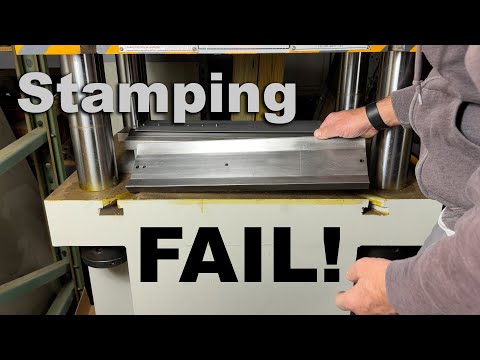
This video details a failed attempt at stamping a firearm component using a 120-ton hydraulic press. Mark Serbu, owner of Serbu Firearms, highlights the critical importance of precise material alignment and die design in sheet metal stamping. The demonstration showcases common pitfalls, such as misalignment leading to skewed parts, and the challenges of achieving complex bends with simple dies. Serbu emphasizes that learning from failures is integral to the engineering process.
Mark Serbu, a recognized firearms designer and manufacturer, discusses his appearance on the 'Oh Great This Show' podcast. The episode delves into industry insights, the history of Serbu Firearms, and personal anecdotes. Serbu encourages viewers to listen to the full podcast via a link in the description.
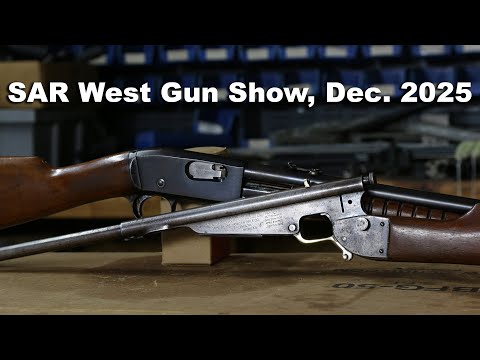
Mark Serbu, a gun designer and enthusiast, shares his experiences at the SAR West Gun Show in Phoenix, Arizona. He highlights unique firearms like the Panzerbüchse 39, Hamilton Model 15, and a rare Winchester M1 Carbine, while also discussing his own Serbu BFG-50A production and the value of attending physical gun shows for discovery and networking.
Mark Serbu, a gun designer, details the complex machining process for the BFG-50A trunnion, a critical component housing the serial number and barrel extension. He discusses challenges with tapping hardened alloy steel, including tap breakage, and the successful implementation of using a larger drill size with molybdenum disulfide grease. The video also covers thread milling techniques for various holes, including the gas cylinder boss, and highlights the importance of precise tolerances for accuracy.
Mark Serbu discusses the challenges of resuming production of the BFG50A, specifically highlighting the complex fixturing required for trigger mag housings. He details the process of machining these housings, including drilling detent holes for take-down and safety pins, and mentions the upcoming anodizing step before shipment. The video emphasizes the time and effort involved in restarting production after a hiatus, especially with intricate parts.
This video provides an overview of the Carvera Air desktop CNC machine, focusing on its capabilities and the learning curve for users. Mark Serbu, a gun designer, shares his experience with the machine, highlighting its ease of use for beginners through pre-designed projects while also discussing challenges for experienced CNC users, particularly regarding post-processors and rapid speed control. The content emphasizes the importance of proper CAM software and post-processor selection for successful machining.
This video details a gunsmithing modification to improve the stability of a shotgun's action bars. The presenter, Mark Serbu, explains how to address 'slop' and potential binding issues in a shortened shotgun by welding the action bars to a stabilizing component. This process aims to create a more solid and reliable action, overcoming design choices intended to prevent binding in the original configuration. The modification is presented as a solution for improving the firearm's performance after significant shortening.
Mark Serbu demonstrates the flame hardening process for the ejection port edge of a BFGA receiver. This technique uses an oxy-acetylene torch to heat the steel to its austenitization temperature, followed by rapid quenching in water. The purpose is to harden the edge, preventing it from bending or dinging when large caliber casings are ejected, thereby increasing the receiver's durability.