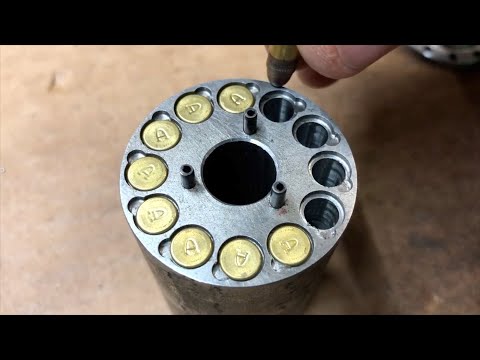
BFG-50A Trunnion Machining!

Published on November 9, 2025
Duration: 11:41

Mark Serbu, a gun designer, details the complex machining process for the BFG-50A trunnion, a critical component housing the serial number and barrel extension. He discusses challenges with tapping hardened alloy steel, including tap breakage, and the successful implementation of using a larger drill size with molybdenum disulfide grease. The video also covers thread milling techniques for various holes, including the gas cylinder boss, and highlights the importance of precise tolerances for accuracy.


Quick Summary

The BFG-50A trunnion is a crucial part made from alloy steel, heat-treated to Rockwell C 34. It's where the serial number is engraved and the barrel extension fits, requiring tolerances of +/- 0.001 inches for accuracy. Machining challenges, particularly tapping hardened steel, were overcome by using a larger drill size and molybdenum disulfide grease.

Frequently Asked Questions

What is the primary function of the trunnion in the BFG-50A rifle?

The trunnion is a critical component of the BFG-50A receiver. It houses the serial number and nomenclature engravings and serves as the point where the barrel extension plugs in, ensuring proper alignment and accuracy.

What are the material and hardness specifications for the BFG-50A trunnion?

The BFG-50A trunnion is constructed from a strong alloy steel, heat-treated to a Rockwell C 34 hardness. This specific hardness is chosen to withstand the subsequent nitriding process applied to the receiver weldment.

What machining challenges were encountered when producing the BFG-50A trunnion?

Significant challenges included tapping hardened alloy steel, which led to broken taps and expensive thread mills. The precise bore tolerance for the barrel extension also required meticulous machining to ensure accuracy.

How did Mark Serbu overcome the tapping issues with the BFG-50A trunnion?

After experiencing tap breakage with standard methods, Mark Serbu found success by using a drill size one increment larger than nominal for the tap hole and applying molybdenum disulfide grease, which greatly eased the tapping process.

Related News

All News →

More Gunsmithing & DIY Videos You Might Like

More from markserbu

View all →