Lathe Machine Gun

Published on July 14, 2021
Duration: 7:07

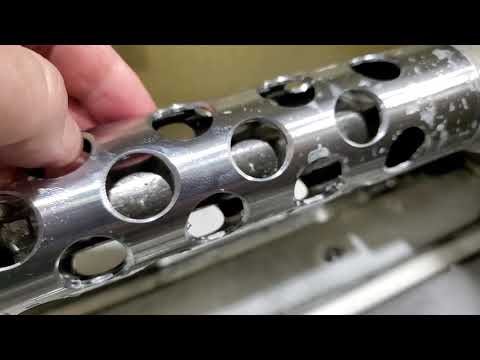
This guide details the complex process of converting a lathe into a 12-barrel blank-firing gun, as demonstrated by Mark Serbu. It highlights the critical engineering challenges, including precise alignment, CNC control, and the application of PID theory to overcome firing inconsistencies. The project emphasizes safety and legal considerations, focusing on blank ammunition to avoid machine gun manufacturing regulations.


Quick Summary

Mark Serbu transformed a Haas CNC Lathe into a 12-barrel blank-firing gun by applying PID control theory. Initial firing failures were resolved by reducing the rapid speed to 25%, ensuring sufficient impact force on blank primers. This project highlights advanced CNC machining and engineering solutions for unique firearms concepts, while adhering to legal blank-firing modifications.

Chapters

  1. 00:00Project Introduction
  2. 00:19Design Evolution
  3. 00:41Safety and Legal Modifications
  4. 01:15Technical Requirements: C Axis
  5. 01:49Alignment and Setup
  6. 03:48Initial Firing Failure
  7. 04:10Engineering Solution: PID Control Theory
  8. 06:08Successful Test and Conclusion

Frequently Asked Questions

How was the 12-barrel lathe gun made to fire reliably?

Reliable firing was achieved by implementing PID (Proportional-Integral-Derivative) control for the CNC motion. Mark Serbu discovered that reducing the rapid speed to 25% allowed the mechanism to maintain momentum and strike the primers with sufficient force, overcoming initial ignition failures.

What legal considerations were addressed in the lathe gun project?

To avoid legal issues related to manufacturing machine guns, the project was specifically designed to fire blank ammunition only. This modification ensures compliance with firearms regulations while still allowing for the demonstration of the unique engineering concept.

What is the role of the 'C Axis' in this lathe gun build?

The 'C Axis' on the Haas CNC lathe is crucial for precise rotational control of the spindle. This allows the firing pin mechanism to be accurately aligned with each of the 12 chambers in the custom cylinder before firing.

What engineering principle was key to solving the firing issues?

The key engineering principle applied was PID (Proportional-Integral-Derivative) control theory. By adjusting the PID parameters, Mark Serbu was able to fine-tune the firing pin's movement, ensuring it had enough velocity and impact force to reliably ignite the blank cartridges.

More Gunsmithing & DIY Videos You Might Like

More from markserbu

View all →