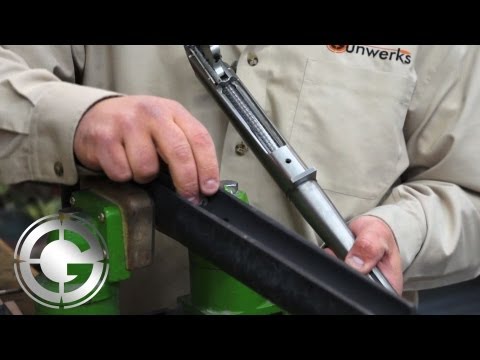
Rifle Trigger Parts & Assembly

Published on July 25, 2011
Duration: 1:42

This video details the precise assembly of a rifle trigger, emphasizing the critical role of each component like the trigger, sear, and housing. It highlights the use of specialized tools such as hydraulic presses and trigger scan devices for accurate adjustments of pull weight, overtravel, and sear engagement. The process ensures maximum rifle accuracy and safety through meticulous verification.

Quick Summary

A rifle trigger consists of housing, trigger, sear, screws, springs, and safety. Assembly involves press-fitting components for the housing and precise installation of internals. Critical adjustments include pull weight, overtravel, and sear engagement, verified using a trigger scan device for accuracy.

Chapters

  1. 00:00Rifle Trigger Components Overview
  2. 00:21Trigger Housing Assembly Process
  3. 00:42Internal Component Installation & Adjustment
  4. 01:09Testing and Safety Mechanism Check
  5. 01:25Final Verification with Trigger Scan

Frequently Asked Questions

What are the main components of a rifle trigger?

A rifle trigger typically consists of the trigger housing, the trigger itself, the sear, adjustment screws, springs, and a safety mechanism. These parts require precise manufacturing and assembly for optimal rifle accuracy and function.

How is a rifle trigger housing assembled?

The trigger housing assembly often begins by press-fitting side plates and adjustment blocks together using oversized pins, sometimes with the aid of a jig and a hydraulic press, forming the base structure.

What critical adjustments are made during rifle trigger assembly?

Key adjustments include the weight of pull, the amount of overtravel after sear release, and the sear engagement. Precise calibration of the sear's interface with the trigger is crucial for performance and safety.

How is a rifle trigger verified for accuracy?

A trigger scan device is used to analyze the trigger's force and movement, generating a force-travel chart. This profile helps verify the trigger's suitability, especially for demanding applications like long-range shooting.

More Gunsmithing & DIY Videos You Might Like

More from Gunwerks

View all →