Sunday Shoot a Round # 142

Published on September 18, 2022
Duration: 69:46

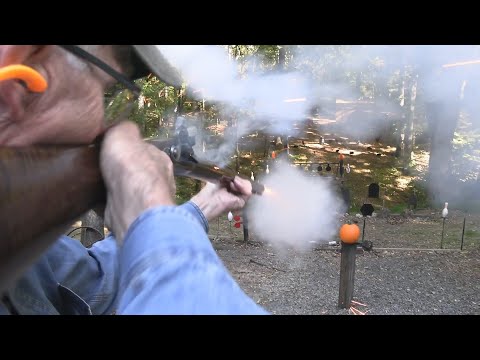
This video provides a detailed look at the American Long Rifle, also known as the Kentucky Rifle, focusing on its operation and historical significance. The host demonstrates the process of loading and firing a flintlock rifle, highlighting the unique challenges and techniques involved, such as managing the ignition delay and ensuring proper powder priming. The discussion also touches upon the craftsmanship of custom-built long rifles and the historical context of these firearms.

Quick Summary

The American Long Rifle, often called the Kentucky Rifle, was a key firearm of the frontier era. Shooting these flintlocks involves managing an ignition delay, ensuring proper priming, and maintaining sight alignment through the 'flinch factor.' Their historical significance and craftsmanship make them unique pieces of firearms history.

Chapters

  1. 00:54Introduction & Welcome
  2. 03:14Springfield Armory Prodigy First Impressions
  3. 05:39Tribute to James C. Jaeger
  4. 10:34Shooting the Prodigy - Second Magazine
  5. 14:10Thoughts on Royalty & Queen Elizabeth II
  6. 19:07New Throwing Axe from Beaver Bill
  7. 20:43Acquiring an American Long Rifle
  8. 23:39Challenges with Flintlock Rifles
  9. 24:31First Shots with the Long Rifle
  10. 29:57Details of the Custom Long Rifle
  11. 33:35Rifled Barrel vs. Smoothbore
  12. 35:05Sights and Adjustments on the Long Rifle
  13. 36:33Reloading the Flintlock
  14. 39:02Shooting the Gong with the Long Rifle
  15. 40:37The 'Mountain Man' Lifestyle
  16. 41:47Comparing Flintlock to AK-47
  17. 42:01Concerns about Gun Control & Regulations
  18. 44:45Another Shot at the Gong
  19. 46:31Powder Horn vs. Powder Measure
  20. 48:09Flintlock Safety & Terminology
  21. 49:27Shooting the 'Kentucky 2-Liter'
  22. 52:20Historical Context of Primitive Technology
  23. 53:33Hunting with a Flintlock
  24. 54:10Muzzleloading Resources & History
  25. 54:35Advice on Media Influence
  26. 59:06Troubleshooting Flintlock Ignition
  27. 60:26The Richness of Shooting Sports
  28. 60:36Final Shots and Historical Context
  29. 62:22Flintlock as State-of-the-Art Technology
  30. 63:06Parts and Events for Muzzleloaders
  31. 66:13Fascination with Civil War Rifles
  32. 67:09Upcoming Firearms Reviews
  33. 68:09The Challenge of Flintlock Shooting
  34. 69:02Final Thoughts on the Kentucky Rifle

Frequently Asked Questions

What is the American Long Rifle and why is it called the Kentucky Rifle?

The American Long Rifle, often referred to as the Kentucky Rifle, was a highly accurate firearm popular in the 18th and 19th centuries. While not originating in Kentucky, it became strongly associated with the state due to its widespread use by frontiersmen like Daniel Boone and its production in the region.

What are the challenges of shooting a flintlock rifle like the American Long Rifle?

Shooting a flintlock rifle presents unique challenges, primarily the delay between pulling the trigger and the shot firing, known as the 'flinch factor.' This requires precise sight alignment and follow-through, as well as careful attention to priming the pan and ensuring the touch hole is clear for reliable ignition.

How does a flintlock mechanism work?

A flintlock mechanism uses a piece of flint clamped in the hammer to strike a steel frizzen. This action creates sparks that ignite a small amount of fine-grain black powder in the priming pan, which then ignites the main charge in the barrel through the touch hole.

What are some historical terms related to flintlock firearms?

Historical terms include 'flash in the pan,' referring to the priming powder igniting without firing the main charge, and 'don't go off half-cocked,' likely originating from the safety position of the flintlock hammer, implying unpreparedness or premature action.

What makes custom-built flintlock rifles like the one shown desirable?

Custom-built flintlock rifles are desirable for their craftsmanship, historical accuracy, and often superior performance compared to mass-produced reproductions. Features like Gat's barrels, quality locks (e.g., Siler locks), and fine wood stocks contribute to their value and appeal.

Related News

All News →

More Gunsmithing & DIY Videos You Might Like

More from hickok45

View all →