The Importance of the Muzzle Crown for Accuracy Presented by Larry Potterfield of MidwayUSA

Published on March 20, 2009
Duration: 1:31

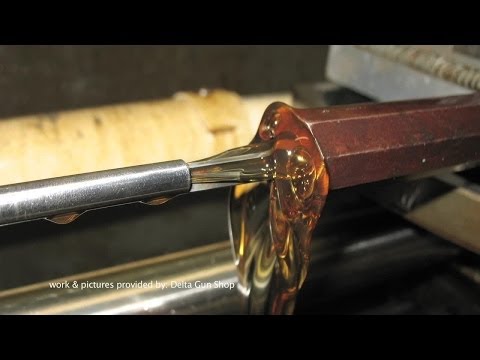
The muzzle crown is a critical, often overlooked, component for rifle accuracy. Even minor damage like a burr can significantly degrade performance. Proper crowning involves precise machining, often on a lathe, to create a clean, angled surface that guides the bullet smoothly out of the barrel. Different crown styles exist, but the integrity of the inner edge is paramount.

Quick Summary

The muzzle crown is a critical component for rifle accuracy, referring to the finished edge at the end of the barrel's bore. Even minor damage like a burr can disrupt the bullet's exit, significantly degrading accuracy. Proper crowning, often done on a lathe, ensures a smooth bullet transition.

Chapters

  1. 00:00Introduction to Muzzle Crowns
  2. 00:14Types of Muzzle Crowns Explained
  3. 00:31How Crown Damage Affects Accuracy
  4. 00:38Tools for Crowning Barrels
  5. 00:46The Muzzle Crowning Process Demo

Frequently Asked Questions

What is a muzzle crown and why is it important for rifle accuracy?

The muzzle crown is the finished edge at the end of a rifle barrel's bore. It's critical for accuracy because it guides the bullet smoothly out of the barrel. Any damage, like a burr, can disrupt the bullet's flight path and significantly degrade accuracy.

Can a damaged muzzle crown be fixed?

Yes, a damaged muzzle crown can be fixed through a process called re-crowning. This typically involves using specialized tools, often on a lathe, to precisely re-face and re-angle the muzzle end of the barrel.

What are the common types of muzzle crowns?

Common muzzle crown styles include standard, deep recessed, recessed target, 11-degree target, and flat. The specific design can influence protection and accuracy, but the integrity of the inner edge is universally important.

How does muzzle crown damage affect a rifle's accuracy?

Even a tiny burr or nick on the muzzle crown can disrupt the bullet's exit from the barrel. This disruption causes the bullet to yaw or tumble slightly, leading to significantly reduced accuracy and larger shot groups downrange.

Related News

All News →

More Gunsmithing & DIY Videos You Might Like

More from MidwayUSA

View all →