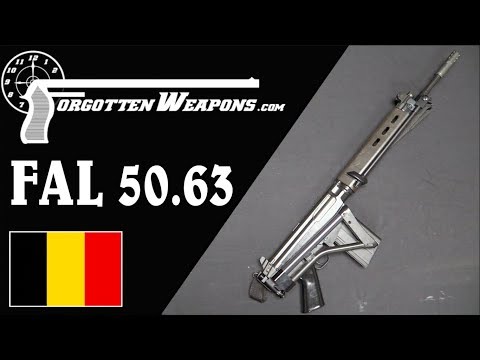
The Prototype .280 FAL from 1950s NATO Trials

Published on February 24, 2020
Duration: 19:06

This guide details the disassembly of the rare Prototype .280 FAL, as demonstrated by Ian McCollum. It covers the process of accessing the internal fire control group via a removable inspection plate and examining the tilting bolt mechanism. The video highlights the historical significance of this rifle in the context of NATO standardization and the development of intermediate cartridges.


Quick Summary

The Prototype .280 FAL, developed by FN for the 1950s NATO trials, was chambered in the .280 British intermediate cartridge. Despite its promising design and lower recoil, it was ultimately rejected due to US opposition, which favored logistical commonality and led to the adoption of the 7.62x51mm NATO round.

Chapters

  1. 00:00Introduction to the .280 Prototype FAL
  2. 01:36NATO Standardization and FN Development
  3. 03:30The .280 Cartridge and 1950 NATO Trials
  4. 05:45US Objections and Political Pressure
  5. 11:12External Features of the Prototype
  6. 13:03Internal Mechanism and Disassembly
  7. 16:31Legacy of the .280 FAL

Frequently Asked Questions

What was the purpose of the .280 British cartridge in the 1950s NATO trials?

The .280 British was developed as a potential replacement for the .303 British, aiming to be a modern, rimless 7mm intermediate cartridge for a new semi-automatic rifle, offering lower recoil than full-power rounds.

Why did the US oppose the .280 British cartridge during NATO trials?

US objections, led by Colonel René Studler, cited concerns about the .280's high trajectory, performance in cold weather, and insufficient cartridge volume for specialty rounds, prioritizing logistical commonality with their existing ammunition standards.

What were the key design features of the Prototype .280 FAL?

The prototype featured a gas-operated, short-stroke piston system with a tilting bolt, a straight-in magazine well (unlike later models), adjustable sights to 600 meters, and a removable inspection plate for the fire control group.

What ultimately became the NATO standard caliber, and why?

The 7.62x51mm NATO became the standard after the US strongly opposed intermediate cartridges. Political pressure and the desire for logistical commonality with US forces led to its adoption, despite the potential advantages of cartridges like the .280 British.

More Gunsmithing & DIY Videos You Might Like

More from Forgotten Weapons

View all →